Article
citation information:
Satora, M., Cholewa-Wójcik, A. Operational challenges
in air transport of oversized cargo. Scientific
Journal of Silesian University of Technology. Series Transport. 2025, 129, 211-224. ISSN: 0209-3324. DOI: https://doi.org/10.20858/sjsutst.2025.129.12
Magdalena SATORA[1], Agnieszka CHOLEWA-WÓJCIK[2]
OPERATIONAL
CHALLENGES IN AIR TRANSPORT OF OVERSIZED CARGO
Summary. This article explores
the formal and legal framework governing the air transport of oversized cargo,
emphasizing applicable regulations and available aircraft types. Drawing on
insights from a semi-structured in-depth interview (IDI) with an industry expert,
the study outlines the key stages of the transport process and identifies
potential hazards that may arise at each step. Particular attention is given to
operational challenges such as regulatory compliance, appropriate aircraft
selection, and coordination of logistics. In response, the paper proposes
targeted preventive and corrective measures aimed at minimizing disruptions and
enhancing the safety and efficiency of operations. The results not only offer
practical guidance for industry professionals but also serve as a foundation
for future research focused on developing tailored risk assessment tools and
methodologies suited to the specific demands for non-standard air cargo
transport.
Keywords: air transport of oversized cargo, legal and technical conditions,
operational challenges, hazard identification
1.
INTRODUCTION
The
transport of oversize cargo plays a significant role in the modern economy due
to the growing number of investments and projects that require the movement of
structural components, infrastructure elements, or industrial machinery with
non-standard dimensions and weight [8]. Oversize cargo is defined as freight
that, due to its characteristics – external dimensions, weight, or packaging
form - cannot be transported using standard means of transportation [5, 9, 28].
It is important to note that the interpretation of this concept may vary
depending on the mode of transportation because of differing legal regulations,
infrastructure specifics, and available means of transport [25]. A shipment
considered as oversized in one transport mode may fall within standard
parameters in another [8]. A general classification of oversized cargo is
presented in Figure 1.
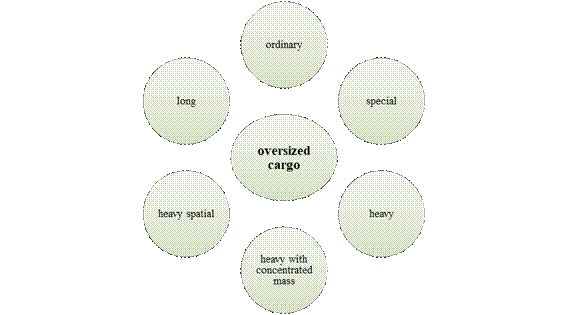
Fig. 1. Types
of oversized cargo
Source: own
work based on [15]
Oversized
loads can be categorized based on their shape, weight, and dimensions. The main types include:
-
ordinary – this group includes steel structures,
small machinery, and industrial equipment. Although they exceed standard
transport dimensions slightly, they usually weigh no more than 25 tons and are
transported using specially marked road vehicles,
-
special – these loads significantly exceed
vehicle dimensions and require dedicated transport routes and specific road
traffic arrangements. They can reach considerable sizes in length, width, and
height,
- heavy
– refers to large-scale equipment or components like tanks, silos, or tram
carriages. Their weight typically ranges from 70 to 100 tons,
-
heavy with concentrated mass – these are
extremely heavy relative to their size, with weights reaching up to 200–300
tons. Examples include transformers or turbines. Transport usually requires
multi-axle trailers or rail solutions,
- heavy
spatial – due to their extreme size and weight (up to 900 tons and 40 meters in
height), these can only be moved by sea or inland waterways. Examples include
port cranes or large pipe systems,
-
long – these are characterized by exceptional
length (up to 40-60 meters), while their other dimensions often fall within
standard ranges. Typical examples include poles, wind turbine blades, or
industrial reactors [14].
Oversized
cargo transport can be transported using various modes of transportation. The
literature discusses selected aspects of such operations in the context of road
[6, 7, 12, 13, 14, 27], rail [18, 19], maritime [3, 16], and inland waterway
transport [11, 24]. It is noticeable that literature is dominated by studies
focused on road transport. Significantly, less attention has been devoted to
issues related to transporting such cargo by air [8, 9], which, despite its
limitations, plays an important role in the global supply chain. Air transport
is sometimes the only solution in regions with insufficient road and rail
infrastructure [20]. It is particularly popular in situations where delivery
time is crucial (e.g., in the case of critical failures).
Air
transport in the context of oversized cargo represents a unique case. It
involves numerous operational challenges that far exceed standard logistics
procedures. First of all, restrictions related to the dimensions of cargo
doors, the maximum lifting capacity of aircraft and the availability of
specialized transport units (such as Antonov An-124 or Boeing 747-8F) require
precise planning and often the involvement of a dedicated fleet. Additionally,
it is necessary to use advanced loading and unloading techniques that take into
account not only the mass and volume of the cargo, but also its weight
distribution and impact on the stability of the aircraft. Problems also arise
in obtaining appropriate permits, coordinating with airports that have
appropriate infrastructure, and ensuring compliance with international safety
and security regulations. As a result, the effective implementation of this
type of transport requires close cooperation between logistics operators, air
carriers and regulatory authorities [8]. Aircraft have limited transport
capabilities due to the dimensions and load-bearing capacity of their cargo
holds. According to [7], in aviation, the criteria for transporting oversized
cargo are strictly defined, and such transport requires special loading
procedures and appropriate aircraft selection to match the characteristics of
the cargo. Furthermore, it is emphasized that such transport depends mainly on
aircraft size. The maximum load a plane can carry corresponds to the parameters
of the cargo hold’s width, height, and length. For
heavy cargo, it is crucial to consider that the aircraft must still be able to
take off. [25] highlight that in practice, if the cargo does not fit into a
standard air container (ULD – Unit Load Device) or on a typical air freight
pallet, and requires a specially chartered cargo aircraft, it is considered
oversized. In addition to unusual dimensions, oversized air cargo may be
characterized by:
- excessive
weight, meaning it exceeds the maximum payload of a standard cargo deck or
requires special loading procedures,
- irregular
shape, meaning it cannot be easily loaded or secured in a standard cargo
compartment.
The
literature emphasizes that the concept of oversized cargo in air transport does
not formally exist; however, in industry practice, it is used to describe
shipments requiring a customized logistical approach [10]. Oversized cargo
transport is a comprehensive service that requires precise planning,
organization, and coordination at every stage – from order acceptance, through
loading, to final delivery. The safety of operations is the paramount goal of
the entire logistics process.
The
aim of this article is to analyze the formal and
technical conditions, identify the key stages, and highlight the operational
challenges, and potential risks involved in organizing air transport of
oversized cargo. The article describes the legal acts regulating this type of
transport and the means of transport used within it. The identification of key
stages, challenges and potential operational risks was based on the results of
a semi-structured, in-depth individual interview (IDI) with an aviation industry
expert with extensive professional experience in the execution of oversized air
cargo operations.
2. CONDITIONS OF AIR TRANSPORT
OF OVERSIZED CARGO
The
successful execution of operational challenges related to the air transport of
oversized cargo is influenced by various factors, including legal, technical,
and organizational conditions. Given that ensuring safety at every stage is
paramount, adherence to applicable legal regulations is essential. These
include international conventions, national aviation transport laws, and
guidelines issued by aviation organizations. Additionally, it is necessary to
consider the technical limitations of this transport mode, such as airport
infrastructure parameters and aircraft specifications. A critical aspect is the
selection of an appropriate means of transport, considering technical
parameters like payload capacity and cargo hold dimensions. This section will
discuss the legal acts governing air transport, technical and operational
constraints associated with oversized cargo transport, and the characteristics
of cargo aircraft utilized in such operations.
Regulations
governing the air transport of oversized cargo encompass international,
European Union (EU), and national laws, necessitating close collaboration among
carriers, freight forwarders, and relevant supervisory authorities. The
foundational legal instrument for international air cargo transport, including
oversized shipments, is the Convention on International Civil Aviation
(commonly known as the Chicago Convention). This convention establishes global
principles concerning aviation safety, airspace management, and aircraft
certification. Additionally, the Montreal Convention addresses the liability of
air carriers for damages arising from cargo transport, including potential
damage to oversized items. For the transport of dangerous goods, the International
Civil Aviation Organization (ICAO) provides Technical Instructions that detail
requirements for the safe international transport of such goods by air.
Complementing these, the International Air Transport Association (IATA) issues
the Dangerous Goods Regulations (DGR), which offer comprehensive guidelines on
the classification, packing, marking, labeling, and
documentation necessary for the air transport of hazardous materials. Within
the EU, the air transport of oversized cargo is regulated by Regulation (EC) No
1008/2008, which outlines common rules for the operation of air services within
the Community. In the context of oversized operations, Regulation (EU) No
965/2012 is particularly significant, as it establishes technical requirements
and administrative procedures related to the safe operation of aircraft. In
Poland, air transport operations are governed by the The
Act of 3rd July 2002 – Aviation Law which specifies requirements for transport
operations, carrier certification, and procedures for obtaining permits for
non-standard transports.
Beyond
legal regulations, technical considerations are crucial in organizing air
transport. Table 1 presents selected limitations encountered in air transport,
along with their brief descriptions.
Tab.
1
Limitations in
the execution of oversize air cargo transport
Source: own work based on [9, 21]
|
Limitation |
Description |
|
Cargo
aircraft capacity and payload |
Selecting an
appropriate aircraft is crucial to accommodate the cargo's specific
requirements, such as its weight, dimensions, and center
of gravity distribution. The aircraft must be capable of carrying the load
without risk of damage or overloading |
|
Airport
capability to handle cargo aircraft |
An airport's
ability to manage oversized cargo operations depends on factors like runway
length, pavement strength, and the availability of infrastructure such as
cargo terminals and technical equipment necessary for handling large
shipments |
|
Transporting
oversized items to suitable airports |
Coordinating
road or maritime transport is necessary to deliver oversized cargo to an
airport equipped with the required infrastructure, such as appropriate
loading facilities and handling equipment |
|
Delivering
cargo from airport to final destination |
Ensuring the
availability of suitable transportation and infrastructure is essential for
moving the cargo from the airport to its destination, considering potential
logistical challenges in road transport |
Therefore,
it can be concluded that despite the existence of clear legal regulations, the
air transport of oversized cargo involves numerous technical challenges that
must be addressed to ensure the safety and timeliness of operations. A critical
factor is the selection of an appropriate aircraft whose technical
specifications align with the requirements of the cargo being transported.
Table 2 presents the technical data of selected cargo aircraft that are or can
be utilized in oversized cargo transport operations. Parameters such as
internal cargo hold dimensions and maximum payload capacity are essential for
determining the capabilities of each aircraft. Additionally, the size of the
cargo doors plays a crucial role, particularly when handling non-standard
goods, as it directly influences loading operations [4].
It
can be observed that aircraft adapted for the transport of oversize cargo
exhibit exceptional capabilities in efficiently carrying large masses during
single air operations. In the context of such transports, one of the most
important cargo aircraft capable of meeting this challenge was the Antonov
An-225 'Mriya'. Unfortunately, this aircraft was destroyed due to military
actions in Ukraine in 2022. The loss of the An-225, one of the most
recognizable and largest of its kind, creates a significant void in the global
fleet for transporting non-standard freight [23].
In
addition to the aircraft mentioned in Table 2, specialized air transport
operations also make use of aircraft from the Airbus Beluga family, which were
specifically designed to transport components used in the production of Airbus
planes [26]. Although the Belugas (both the A300-600ST version and the newer
A330-700L) are primarily used for internal operations by Airbus, their
transport capabilities make them suitable for carrying oversized cargo for
external clients, especially in situations requiring transport tailored to
large, specific loads. It is worth noting that in 2022, Airbus established the
Airbus Beluga Transport (AiBT) line for transporting
special cargo outside the Airbus production network. However, in January 2025,
the company announced the suspension of AiBT's
operations, marking the end of this short-lived venture focused on specialized
oversized cargo transport services [22]. Despite the closure of AiBT, the Airbus Beluga remains a key tool for transporting
aircraft components and other specialized cargo.
Tab. 2
Cargo
parameters of the largest transport aircraft
Source: own
work based on [9]
|
Aircraft model |
Cargo hold
dimensions [m] |
Cargo door
dimensions [m] |
Maximum payload
[t] |
|||
|
width |
length |
height |
width |
height |
||
|
Antonov 225 |
6.40 |
43.00 |
4.40 |
6.40 |
4.40 |
250.00 |
|
Boeing 747 cargo |
3.17 |
49.00 |
3.04 |
3.40 |
3.04 |
111.00 |
|
Antonov 124 |
6.40 |
36.50 |
4.40 |
6.40 |
4.40 |
110.00 |
|
McDonnell D.MD11 |
3.50 |
48.00 |
2.31 |
3.55 |
2.59 |
80.00 |
|
McDonnell D. DC10 |
3.17 |
37.25 |
2.23 |
3.55 |
2.59 |
66.00 |
|
Boeing 767 cargo |
4.00 |
30.00 |
2.50 |
2.54 |
3.40 |
60.00 |
|
Boeing 767 |
4.00 |
30.00 |
2.50 |
3.40 |
2.59 |
54.00 |
|
Ilyushin Ił-76 |
3.46 |
20.00 |
3.40 |
3.44 |
3.40 |
45.00 |
|
Airbus A300 cargo |
4.77 |
39.00 |
2.23 |
2.56 |
3.58 |
45.00 |
|
McDonnell D. DC 8 |
3.17 |
31.54 |
2.30 |
3.35 |
2.03 |
44.00 |
In
summary, understanding technical details is key to aligning the right aircraft
with the requirements of a transport assignment. The cargo hold dimensions and
door sizes directly impact loading operations, determining the feasibility of
loading specific cargo and influencing the choice of compatible airports. The
payload capacity further helps in assessing the maximum weight that can be
transported, which is critical for effective transport planning. Thus,
selecting an aircraft involves careful consideration of these specifications to
ensure the success of oversized cargo transport. To further explore how such
operations are organized and managed in practice, the following section
presents the qualitative research methodology applied in this study.
3. MATERIAL
AND METHODS
To
identify key stages and hazards in oversize air cargo transport, a qualitative
research method was employed, which included a semi-structured in-depth
interview (IDI) with an expert in the field. This method, widely used for
obtaining detailed, qualitative insights into complex phenomena [1, 2], was the
most appropriate choice for this study, as it allowed for a deep exploration of
the respondent's experiences and perspectives on organizing non-standard cargo
transportation.
The
interview process was guided by a pre-prepared list of questions, but allowed
for flexibility, enabling the expert to freely elaborate on relevant topics.
This approach provided rich insights into new areas that emerged during the
conversation, ensuring the researcher could address a range of issues beyond
the initial framework [17]. The interview allowed for a deeper understanding of
the specific challenges and logistical complexities involved in the
transportation of oversize goods.
The
respondent was a highly experienced professional from the air cargo logistics
industry, bringing years of hands-on expertise in organizing air transport
operations. The expert’s practical knowledge offered invaluable information
about the challenges involved in planning and executing air transport for
oversized cargo. This conversation also helped gain an understanding of the
respondent’s subjective views on the operational complexities of both air and
ground logistics in this specialized area.
The
semi-structured interview consisted of 12 open-ended questions, covering the
following key areas:
- verification
procedures for transport orders,
- analysis
of legal and technical requirements,
- planning
of air and ground transport operations,
- use
of loading and unloading equipment and techniques,
- risk
management and emergency procedures.
The
open-ended nature of the questions allowed the respondent to freely share
experiences and views, facilitating a detailed exploration of critical issues
surrounding oversized cargo transport. The interview, which lasted about 45
minutes, took place online via Microsoft Teams, with a friendly and open tone
to ensure the respondent felt comfortable sharing detailed and honest
responses. Due to confidentiality agreements, some sensitive operational
details were not disclosed, and certain answers were generalized.
The
collected data were subjected to content analysis, aimed at extracting the main
thematic categories and conclusions. This approach facilitated a comprehensive
analysis of the expert's insights and the identification of key elements
influencing the studied processes.
4. RESULTS AND
DISCUSSION
Based
on the semi-structured in-depth interview conducted with an expert from the
aviation industry, it was possible to reconstruct in detail the various stages,
challenges, and risks associated with organizing oversize cargo transport by
air. The interviewee, who has extensive experience in planning such operations,
presented both standard procedures and specific cases that illustrate the
complexity of the discussed issue.
The
transport process begins with the analysis of the feasibility of accepting the
shipment. This is a crucial moment where the parameters of the cargo, such as
its weight, dimensions, and safety requirements, are analyzed.
Simultaneously, the technical capabilities of the infrastructure at both the
departure and destination airports are verified, along with regulatory aspects
such as oversized cargo transport regulations, the need to obtain permits, and
the availability of flight slots. At this stage, it is also essential to comply
with international regulations, such as those from ICAO (International Civil
Aviation Organization) and IATA (International Air Transport Association). As
the respondent noted: ‘Before we undertake the operation, we must thoroughly
analyze whether it is even feasible – it’s not just
about the size, but also regulatory issues and airport capabilities’. At
this point, a preliminary cost estimate and a provisional schedule for the
execution of the order are also prepared. Often, initial technical
consultations with the cargo sender, end client, and customs services are
required at this stage.
The
next stage is transport planning, which requires the involvement of a team of
specialists from various fields – from engineering to logistics. Key decisions
here involve selecting the appropriate aircraft that can accommodate the cargo
while meeting requirements related to the center of
gravity, floor load capacity, and cargo space. ‘We need to choose the right
aircraft based on weight and dimensions. Then we have to plan the route, check
where we can land, whether the runways are long enough, and whether the airport
can handle such operations’ emphasized the respondent. At this stage,
ICAO’s safety guidelines for air operations and IATA’s standards for
documentation and cargo transport are also taken into account. Additionally, an
essential element is considering customs procedures and other legal regulations
related to international freight transport, which may include requirements for
customs clearance, shipping documentation, as well as specific security and
cargo control requirements depending on the country of origin and destination
of the cargo. In some cases, additional transport permits are required,
including those from customs authorities, agencies responsible for checking
exports and imports, and external services dealing with international transport
control.
One
of the critical stages in organizing oversized cargo transport by air is the
coordination of ground transport, which is carried out by external logistics
companies. Although the air operator is not directly responsible for organizing
this, it is essential to ensure precise synchronization of the cargo delivery
to the airport with the flight operation schedule. As the expert emphasized: ‘If
the truck is delayed, and the loading window on the tarmac is already open,
everything is delayed, and time is money in this case’. At this stage, it
is crucial to check whether the transport vehicles are suited to the specifics
of the cargo – this includes both low-bed trailers and technical equipment such
as cranes needed for loading. It is also necessary to verify whether the delivery
is planned well in advance and in accordance with the airport’s infrastructure
requirements. If needed, support may be provided to the client or transport
company in adjusting the timing and organizing airport passes or escorts. ‘Sometimes,
the loading has to be postponed because, for example, the convoy cannot enter
the airport grounds during peak hours’ the interviewee pointed out.
The
next stage is the technical inspection and loading of the cargo onto the
aircraft. This is one of the most demanding phases of the entire process
because each loading operation must be carefully planned in terms of the
aircraft’s balance, allowable floor load, and cargo securing during the flight.
Before loading, a detailed inspection of the shipment’s condition is carried
out, checking the state of packaging, securing devices, and support points. As
the expert noted: "The biggest challenge is not the weight itself, but
the center of gravity – we must precisely plan the
cargo placement to avoid disturbing the aircraft's balance. Sometimes we use
roller systems or special ramps to load the cargo onto the aircraft’. This
process involves technical teams from the air carrier, freight operator, and
often independent inspectors who oversee the safety of the entire operation.
Next
comes the flight execution. Although it may seem that the flight itself is the
simplest stage, in reality, it requires ongoing monitoring of numerous
variables. ‘On paper, it looks simple – you fly from point A to point B. But
along the way, the weather can change, there may be turbulence, and we have to
avoid certain airspace zones. Sometimes, during the flight, we must adjust
altitude or the route. We are in constant contact with the pilots and air
traffic control’ the expert shared. These types of flights are often
classified as special cargo operations and are carried out under strict air
traffic control supervision. In emergency situations, such as deteriorating
weather conditions or technical failures, procedures are in place to divert to
backup airports, which must also be pre-approved.
The
final stage is unloading and handover of the cargo to the recipient. This
operation follows a similar procedure to loading, maintaining all safety
protocols and technical checks. Once the aircraft has landed, the cargo is
transferred to the designated area, where a final inspection is carried out,
and the delivery documentation is signed. ‘At the end, everything must match
– the weight, the technical condition. Sometimes the recipient has their own
inspectors overseeing the unloading. We must ensure that the cargo has arrived
in an undamaged state’, the expert emphasized. Only after confirming the
cargo’s compliance with the documentation and its proper technical condition is
it handed over to the end client or further transported by road to its
destination.
The
expert’s statements clearly show that oversized cargo transport by air is a
complex, multi-stage process requiring not only advanced technical and
operational knowledge but also a high level of coordination, flexibility, and
risk management skills. Each stage – from the feasibility analysis to the final
unloading – presents potential challenges, and failing to anticipate them can
lead to serious consequences. As the respondent concluded: ‘This is not an
ordinary shipment – every detail matters. Sometimes, even the smallest mistake
can impact the entire operation.’
Based
on the conducted semi-structured interview with an expert from the aviation
industry, it was possible to reconstruct in detail the stages and activities
involved in organizing the transport of oversized cargo by air. This
information has been visualized in a diagram (Fig. 2), which depicts the six
main stages of the process, and the key actions carried out within them.
The
primary objective of this research was to identify the key stages involved in
the air transport of oversized cargo, as well as to highlight potential risks
associated with each stage. The diagram developed in this study serves as an
illustrative tool to present these key stages, offering a clear overview of the
various tasks and processes involved in the transport of oversized cargo.
Insights
gained from the expert interview further contributed to identifying critical
stages in the process. The expert’s extensive experience provided valuable
perspectives on the operations and challenges involved, allowing for a deeper
understanding of the intricacies of each stage in oversized cargo transport.
This information was essential for recognizing where potential hazards may
arise, even if they are not immediately apparent during the process.
Additionally,
Table 3 presents a summary of the potential hazards associated with each
identified stage. Alongside these hazards, recommended preventive measures and
corrective actions are outlined. These recommendations aim to mitigate the
impact of such challenges, offering practical solutions for optimizing
operations and ensuring the safe and efficient transport of oversize cargo.
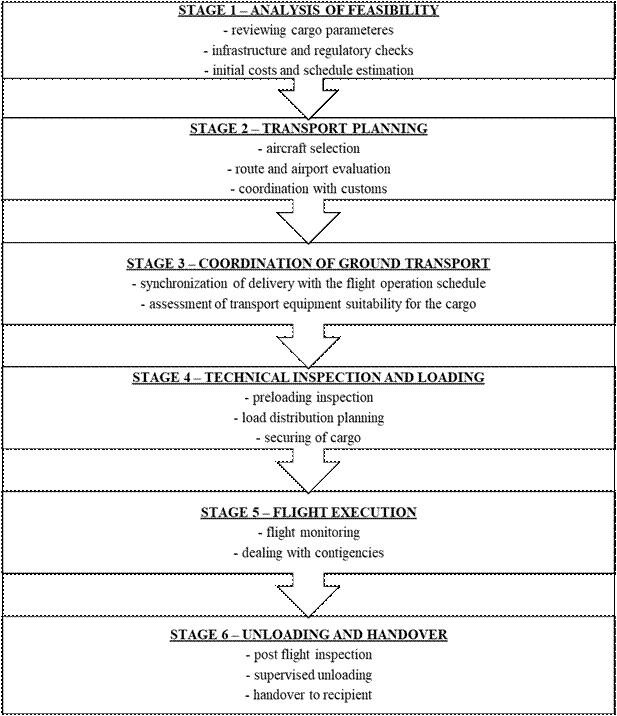
Fig. 2. Stages
of oversized cargo transport by air
Source: own
work
Tab. 3
Potential hazards, recommendations, and
preventive actions in oversize cargo transport by air
Source: own work
|
Process stage |
Potential hazard |
Recommendations/preventive
actions |
|
Analysis of feasibility |
-
Non-compliance with international regulations (ICAO, IATA) - Incorrect
assessment of infrastructure capabilities |
- Early
involvement of technical and legal experts |
|
Transport planning |
- Incorrect
selection of the aircraft -
Insufficient runway length or weight limitations |
- Use of
specialized tools for load and route simulation -
Verification of infrastructure requirements for each airport along the route |
|
Coordination of ground
transport |
- Delivery
delays - Lack of
coordination between the air operator and the ground carrier |
- Early
synchronization of schedules - Constant
operational communication and escalation mechanisms in case of delays |
|
Technical inspection
and loading |
- Disruption
of the aircraft's center of gravity - Damage during loading |
-
Preparation of a detailed cargo placement plan - Use of
certified loading equipment and supervision by independent inspectors |
|
Flight execution |
- Changing
weather conditions - Unforeseen
airspace restrictions |
-
Preparation of alternative emergency airports - Ongoing
analysis of weather conditions and flight plans |
|
Unloading and handover |
- Incorrect
unpacking or damage to the cargo - Incomplete
documentation |
-
Involvement of recipient's technicians in the unloading process -
Double-checking of documents and final cargo quality inspection |
The
conducted analysis enabled the identification of the main threats associated
with organizing oversized cargo transport by air. The risks outlined in Table 3
highlight the complexity and multi-stage nature of the process, emphasizing the
critical need for careful planning, coordination, and technical supervision.
The compiled findings provide a practical framework for improving the
efficiency and operational safety of air transport operations involving
non-standard cargo, supporting both strategic planning and real-time
decision-making in complex logistics environments.
5. CONCLUSIONS
This
paper has thoroughly examined the formal and legal framework surrounding
oversize cargo air transport, emphasizing the applicable legal acts and the
available means of transport. The analysis reveals the complexity of managing
oversized cargo transport, with an emphasis on the intricate balance between
legal compliance, operational logistics, and the selection of appropriate
transport means.
The
study identified the key stages of the transport process and the hazards
associated with each stage, highlighting the critical importance of
coordination between various stakeholders, including cargo shippers, logistics
operators, airport authorities, and customs. The identified possible hazards –
ranging from regulatory compliance issues to the physical and logistical
challenges of handling oversized cargo – underscore the need for meticulous
planning and risk management strategies. In particular, the complexities
introduced by legal regulations and infrastructure constraints must be
addressed to avoid operational disruptions.
Furthermore,
the article proposes practical recommendations for mitigating the identified
risks. These recommendations include adopting preventive measures such as
early-stage regulatory compliance checks, ensuring compatibility between
transport vehicles and cargo, and maintaining clear communication channels
between all involved parties. Corrective actions for operational errors, such
as delays or equipment mismatches, are also outlined, aiming to optimize the
efficiency and safety of the transport process.
The
findings not only provide insights into current practices but also highlight
significant opportunities for future research. Specifically, the need for
developing systematic risk assessment methodologies tailored to oversized cargo
transport becomes evident. Such methodologies could facilitate more accurate
identification and management of risks, ultimately improving operational
efficiency and safety in this specialized field.
Although
this study offers practical insights into the organization of oversized cargo
transport by air, it is important to recognize its limitations. Relying on a
single expert interview, the study introduces a level of subjectivity, and the
insights derived are not fully representative of the broader industry
landscape. Future research, incorporating multiple perspectives from different
stakeholders within the air transport and logistics sectors, could lead to a
more comprehensive and nuanced understanding of the challenges and best
practices in managing oversized cargo transport by air.
In
conclusion, while the regulatory and logistical complexities involved in
oversized cargo air transport are significant, effective risk management
strategies, supported by robust legal frameworks and operational tools, can
significantly enhance the efficiency and safety of these specialized
operations.
References
1.
Atkinson
Paul, Martin W. Bauer, George Gaskell. 2000. Qualitative Researching with
Text, Image and Sound: A Practical Handbook for Social Research. London:
SAGE Publications.
2.
Brinkkmann
Svend, Steinar Kvale. 2018. Doing Interviews. London: SAGE Publications.
ISBN: 9781473912953.
3.
Chmieliński
Mirosław. 2017. „Safety of oversize cargo in ports and in the sea transport”. TransNav:
International Journal on Marine Navigation and Safety of Sea Transportation
11(1): 151-157. ISSN: 2083-6473. DOI: https://doi.org/ 10.12716/1001.11.01.18.
4.
Galor Wiesław. 2011. Przewóz i techniki mocowania ładunków
ponadnormatywnych w transporcie. [In
Polish: Transport and securing techniques for oversized loads in transport].
Szczecin: Maritime University Scientific Publishing House.
5.
Galor Wiesław, Anna Galor. 2010.
„Transport ładunków ponadgabarytowych - wybrane zagadnienia”. Drogi lądowe, powietrzne, wodne 1(21). [In Polish: „Transportation of oversized cargo -
selected issues”. Land, air, and water routes].
6.
Garstea
Nina. 2024. „Oversized road transport - particularities, realization
conditions, problems and development perspectives”. Journal of Engineering
Science 31(1): 7-17. ISSN:
2587-3474. DOI: https://doi.org/10.52326/jes.utm.2024.31(1).01.
7.
Janczak Paweł, Zbigniew
Matuszak, Iwona Żabińska. 2019.
„Possibilities and problems of oversize cargo in road transport in Szczecin”. Autobusy
– technika, eksploatacja, systemy transportowe 20(1-2): 477-481. [In
Polish: Buses – technology, operation, transport systems]. ISSN: 1509-5878. DOI: https://doi.org/10.24136/atest.2019.089.
8.
Jóźwiak Zofia. 2011.
„Logistyka w transporcie ładunków ponadnormatywnych drogą lotniczą - projekt Oversize Baltic”. Logistyka 2:
223-231. [In Polish: „Logistics in the transport of oversized cargo by air -
the Oversize Baltic project”. Logistyks]. ISSN: 1231-547.
9.
Jóźwiak
Zofia. 2010. „Oversize loads in the air transport”. Logistyka 4. ISSN: 1231-547.
10.
Juściński
Sławomir. 2023. „Comprehensive analysis of oversized cargo transportation
market in Poland (2001-2022): Trends, regulations, and industry dynamics”. Journal
of Sustainable Development of Transport and Logistics 8(2): 136-152. ISSN: 2520-2979. DOI:
https://doi.org/10.14254/jsdtl.2023.8-2.10.
11.
Kaup
Magdalena. 2015. „Selected problems of inland oversize cargo transportation”. Logistyka
4: 398-3990. ISSN: 1231-547.
12.
Lasota Michał Krzysztof,
Marek Sokołowski, Czesław Wojdat, Arkadiusz Pietrzak. 2025. „Risk of adverse events in the transportation of
oversize cargoes”. Eksploatacja i Niezawodność – Maintenance and Reliability
27(1). ISSN: 1507-2711. DOI: https://doi.org/10.17531/ein/197383.
13.
Lesiak
Gabriel, Szymon, Mitkow. 2022. "The process of organisation of abnormal
road transport on the example of Poland". Bulletin of the Military
University of Technology 71(4): 15-30. ISSN: 1234-5865. DOI:
https://doi.org/10.5604/01.3001.0053.8567.
14.
Masłowski Dariusz,
Małgorzata Dendera-Gruszka, Julia Giera, Ewa
Kulińska, Krzysztof Olejnik, Justyna Szumidłowska. 2024. „Risks and Challenges of Oversized Transport in the
Energy Industry”. Energies 17(24): 6444. ISSN: 1996-1073. DOI:
https://doi.org/10.3390/en17246444.
15.
Neider
Janusz. 2019. Transport Międzynarodowy. [In Polish: International
Transport]. Warsaw: Polish Economic Publisher. ISBN: 978-83-208-2191-8.
16.
Onyshchenko
Svietlana, Olexand Shibaev, Oleksi Melnyk. 2021. “Assessment of Potential
Negative Impact of the System of Factors on the Ship’s Operational Condition
During Transportation of Oversized and Heavy Cargoes”. Transactions on
Maritime Science 10(1): 126-134. DOI:
https://doi.org/10.7225/toms.v10.n01.009.
17.
Patton
Michael Quinn. 2002. Qualitative Research & Evaluation Methods.
London: SAGE Publications. ISBN 0-7619-1971-6.
18.
Petraska
Arturas. 2011. „The role of rail freight in oversize and heavyweight cargo
transportation in Lithuania”. In: Proceedings of the 7th International
Scientific Conference „Transbaltica 2011: 166-170. Vilnius Gediminas
Technical University, Vilnius, Lithuania. 5-6 May 2011, Vilnius, Lithuania.
19.
Petraska Arturas, Aldona Jarasuniene, Kristina Ciziuniene. 2017.
„Routing Methodology for Heavy-weight and Oversized Loads Carried by Rail
Transport”. Procedia Engineering 178: 589-596. ISSN: 1877-7058. DOI:
https://doi.org/10.1016/j.proeng.2017.01.114.
20.
Petru
Jan, Vladislav Krivda. 2021. „The Transport of Oversized Cargoes from the
Perspective of Sustainable Transport Infrastructure in Cities”. Sustainability
13(10: 5224. ISSN: 2071-1050. DOI: https://doi.org/10.3390/su13105524.
21.
Rudziński
Robert, Mariola Kowalska. 2012. „The Essence and Characteristics of Oversize
Loads”. Zeszyty Naukowe
Uniwersytetu Przyrodniczo-Humanistycznego w Siedlcach, Seria: Administracja i
Zarządzanie 22(195): 339-355. [In Polish: Scientific Papers of the Siedlce
University of Natural Sciences and Humanities, Series: Administration and
Management]. ISSN: 2082-5501.
22.
Rynek lotniczy. „Airbus BelugaXL z bliska. Zajrzeliśmy
do środka frachtowca”. [In Polish:
„The Airbus BelugaXL Up Close: We Take a Look Inside the Freighter”]. Available
at:
https://www.rynek-lotniczy.pl/wiadomosci/airbus-belugaxl-z-bliska-zajrzelismy-do-srodka-frachtowca-zdjecia-23612.html.
23.
Rynek lotniczy. „An-225
“Mrija” kompletnie zniszczony przez Rosjan”. [In Polish: „An-225 “Mriya” completely destroyed by
Russians”]. Available at:
https://www.rynek-lotniczy.pl/wiadomosci/an-225-34mrija34-kompletnie-zniszczony-przez-rosjan-13886.html.
24.
Schoenich Marta, Michał Habel, Dawid Szatten, Damian Absalon, Jakub Montewka.
2023. “An Integrated Approach to an
Assessment of Bottlenecks for Navigation on Riverine Waterways”. Water
15(141). ISSN: 2073-4441. DOI: https://doi.org/10.3390/w15010141.
25.
Skowrońska Agnieszka,
Łukasz Kołodziejczyk. 2020. „Przewozy ładunków wielkogabarytowych w pojazdach
nienormatywnych”. Gospodarka
Materiałowa i Logistyka 7: 2-14.
[In Polish: „Transportation of oversized cargo in oversized vehicles”. Materials
Management and Logistics]. ISSN: 1231-2037. DOI:
https://doi.org/10.33226/1231-2037.2020.7.1.
26.
Stephan
Cyrille, Pascal Lubrina, Julian Sinske, Yves Govers, Nicolas Lastere. 2019.
Airbus Beluga XL State-of-the-art Techniques to Perform a Ground Vibration Test
Campaign of a Large Aircraft. International Forum on Aeroelasticity and
Structural Dynamics „IFASD 2019”. 9-13 June 2019, Savannah, United
States.
27.
Wolnowska Anna E., Wojciech Konicki. 2019. „Multi-criterial analysis of oversize cargo
transport through the city, using the AHP method”. Transportation Research
Procedia 39: 614-623. ISSN: 2352-1465. DOI:
https://doi.org/10.1016/j.trpro.2019.06.063.
28.
Żurawski J. 2020.
„Transport ładunków ponadnormatywnych”. [In
Polish: „Transport of oversized cargo”]. In: Podręcznik spedytora [In
Polish: Freight Forwarder's Manual], edited by Danuta Marcinak-Neider,
Janusz Neider, 635-659. Gdynia: Polish International Freight Forwarders
Association. ISBN: 9788392423485.
Received 30.05.2025; accepted in revised form 30.08.2025

Scientific Journal of Silesian
University of Technology. Series Transport is licensed under a Creative
Commons Attribution 4.0 International License