Article
citation information:
Alici, A. Financial sustainability performance of airlines.
Scientific Journal of Silesian University
of Technology. Series Transport. 2025, 129,
27-50. ISSN: 0209-3324. DOI: https://doi.org/10.20858/sjsutst.2025.129.2
Abdulkadir ALICI[1]
FINANCIAL
SUSTAINABILITY PERFORMANCE OF AIRLINES
Summary. The aim of the study is
to analyze the financial sustainability of airline
companies. In this study, ESG (Environmental, Social, and Governance) scores,
financial failure, and financial rating scores were analyzed
using Multi-Criteria Decision Making (MCDM) methods to analyze
the financial sustainability performance of airlines. The study measures
financial sustainability performance using data obtained from 30 airlines in
2023. The Altman Z model used in the study has been adopted as an optimal
method for measuring the risk of financial failure in the airline industry.
Additionally, the TAA financial rating method was used to evaluate the
financial efficiency and risk levels of airlines, presenting a unique approach
as the first application in the literature in this field. The TAA financial
rating method and MCDM methods used in the study enable the evaluation of not
only the current financial status of companies but also their future financial
risks and opportunities. The study provides strategic guidance to the industry
on integrating ESG scores with financial failure analysis and financial rating
methods. These findings will serve as an important reference point for both
academic research and airline policies and practices.
Keywords: financial sustainability, ESG, sustainability, LOPCOW and CRADIS,
aviation management
1. INTRODUCTION
Financial sustainability has become increasingly
important for companies when making strategic decisions. Besides focusing on
their long-term financial performance growth and improvement, as Bennett and
James [2] highlighted, companies are now also expected to fulfill
their social and environmental responsibilities. This means that businesses
need to consider economic success and integrate social and environmental
factors into their strategic decision-making processes. Maintaining stability
is especially crucial in industries such as aviation due to their reputation
for consuming large amounts of energy and emitting carbon [28].
The financial stability of airlines is
influenced by a mix of conditions and societal and environmental factors that
shape their performance over time. Evaluating companies based on ESG
(Environmental, Social, and Governance) scores provides a framework for
assessing their environmental consciousness, social responsibility, and
governance practices. These scores impact companies' long-term financial health
beyond market value [11]. Therefore, it is crucial to consider ESG scores
alongside traditional financial metrics to get a holistic view of the on the
financial sustainability of the airlines.
The importance of ESG in ensuring sustainability
and shaping the future is highlighted by its defining qualities. Taking part in
ESG and sustainability efforts enables airlines to enhance their responsibility
concerning results and social influence. The airline industry stands out as a
sector where ESG principles are becoming progressively important due to its
significant emissions and influence over temperature patterns. The aviation
sector is making efforts to reduce carbon emissions and noise pollution as well
as address environmental concerns while also prioritizing social responsibility
and governance [21, 35]. Despite its contribution to the global economy, the
aviation industry faces sustainability challenges. The International Civil
Aviation Organization (ICAO) is trying to reduce emissions on a scale as
detailed in their latest reports from 2021 to 2022. This includes promoting
energy sources and implementing initiatives to reduce carbon emissions [15,
16].
This includes promoting energy sources and
implementing initiatives to reduce carbon emissions. Environmental, Social, and
Governance (ESG) practices in the aviation industry impact financial
performance. Studies suggest that ESG policies improve long-term financial
performance. Companies that emphasize ESG characteristics and standards get
more attention, improving their financial sustainability. Research on Norwegian
firms demonstrates that ESG disclosures benefit financial performance [13].
Thus, it signifies that ESG must be recorded inside firms in the aviation
sector. ESG policies empower governments to alleviate financial risks and
bolster their resilience to calamities. Thus, ESG reporting in the aviation
sector is crucial for sustainability efforts [13].
This study assesses how well airlines are doing
financially by looking at ESG ratings and financial performance metrics using
Multi-Criteria Decision Making (MCDM). MCDMs help to give a comprehensive
evaluation by considering various factors in complex decision-making processes
[25]. Since airline companies operate in a competitive market and are
vulnerable to external economic changes, this method provides a good way to
evaluate the industry's financial sustainability.
This study is driven by the necessity to address
the challenges faced by the aviation sector, such as high-energy consumption
levels and environmental impact due to carbon emissions. Financial
sustainability encompasses prosperity as well as meeting environmental and
social responsibilities. Integrating ESG ratings into financial assessment
systems allows for evaluating sector sustainability. The study explores ways
airlines can strengthen their resilience against instability and global crises,
like pandemics, while addressing increasing environmental pressures. This
approach aims to contribute insights to academic studies and shed light on
practical ways to address industry challenges uniquely and innovatively by
leveraging ESG criteria to gauge financial viability and gain a competitive
advantage.
2. CONCEPTUAL
FRAMEWORK AND LITERATURE
Achieving
development involves looking at the economic impact as well as environmental
and social aspects in a holistic manner. That is what the United Nations
Sustainable Development Goals (SDGs) introduced in 2015, which urged companies
to do as well by focusing on profits and their responsibilities towards the
environment and society [37]. To reach these objectives successfully and gauge
companies' sustainability efforts effectively, ESG (Environmental Social
Governance) scores are used to assess their performance in these areas. As
sustainable finance is relatively new and evolving worldwide, no universal
framework or widely accepted standards and procedures are currently in place. A
taxonomy has been established to outline investment’s requirements to qualify
as green finance. Additionally, the United Nations has taken steps to
categorize finance and define its structure accordingly.




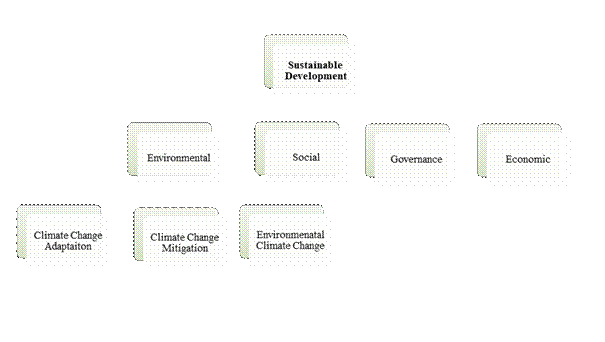
Fig. 1. UN
Financial Sustainability Framework
Source: [37]
The
study's theoretical framework is based on the UN's "Financial
Sustainability Framework". This direction aims to measure the financial
sustainability of airline companies. The financial sustainability analysis of
airline companies was carried out by measuring the Environmental, Social, and
Governance headings with ESG scores and the Economy headings with financial
failure and financial rating scores using the MCDM (Multi-Criteria Decision
Making) method. Studies that reveal the relationship between sustainability and
financial performance are presented to support the theoretical background of
the study systematically designed within the scope of the financial
sustainability framework.
2.1.
Sustainability and Financial Performance
A
literature review was conducted, considering studies examining the relationship
between financial sustainability and financial performance. The reviewed
literature is presented in Table 1.
Tab. 1
Sustainability
and Financial Performance Literature
|
Author Name
Surname/Date |
Method |
Variables |
Findings |
|
Canikli
(2022) [5] |
Content analysis |
Climate Change, Sustainable Development, Sustainable
Finance Covid-19 |
While interest in sustainable finance is increasing
worldwide, more incentives and investments are required. In Turkey, there are
some efforts in this regard, although they are not sufficient. |
|
Satioglu
(2021) [29] |
Content analysis |
Sustainable finance, Green bonds, Social and
sustainable bonds, equity and index funds |
The most important requirement for the development
of sustainable finance is the development of standards. |
|
Senbayram
(2022) [33] |
Systematic
literature review |
Sustainability, Sustainable Development, Green
Transformation |
It is emphasized that it is necessary to be
sensitive in taking the steps planned for sustainability, and in developing
countries such as Turkey, it is necessary to go with the sensitivity of
economic growth. It was concluded that Turkey should increase the speed of
its efforts for the sustainable development target among the 2030 targets. |
|
Simsek et
al. (2022) [34] |
Content analysis, Report Analysis |
Green Bonds, Green Financing, Sustainable
Development |
It has been achieved that green bonds are expected
to grow in developing countries and will play an important role in
sustainable development. |
|
Zairis et
al (2024) [42] |
Literature analysis of 80 studies on sustainable
finance and ESG criteria obtained from the Scopus research database |
Sustainable finance, ESG criteria, ESG and Finance |
Between 2011 and 2017, the number of publications
varied between one and three per year, reaching 31 in 2021. In the early part
of the decade analyzed, the research was more
comprehensive, and as we enter the last period, more specific factors of ESG
were investigated in the articles. Most of the research has been conducted
in Europe. |
|
Munteanu,
et al. (2024) [20] |
Bibliometric analysis |
Circular economy, financial performance, financial
strategies |
At the end of the study, 4 approaches were
identified. 1. that the relationship between circular economy and green
financial performance is quite high, 2. that the environmental impact of the
circular economy depends on the economic integration of recycling and
bioenergy production, 3. that the development of detailed measurements on
circular economy provides a competitive advantage when using circular economy
practices, and 4. that circular economy relationships are closely linked to
government support. |
|
Hooda and Yadav (2023) |
In the study, literature was analyzed
using the SLR method |
ESG, sustainability performance, green finance,
aviation sector, sustainable aviation fuel, low carbon use |
ESG criteria in aviation need to be integrated into
financing functions. Various economic incentives are needed to support
sustainability. More investment, incentives, and support are needed to
realize sustainable development in the aviation sector. |
|
Daube et
al (2024) [8] |
An approach based on literature review and sectoral
data analysis was used |
Sustainable economy, innovation, pure fuel, carbon
emissions, greenhouse gas absorption, global climate change |
Adopting the Circular Economy in aviation can
significantly reduce waste, optimize resource use and contribute to the
global fight against climate change by reducing greenhouse gas emissions.
Circular economy principles not only increase sustainability, but also
contribute to cost savings and operational efficiency. There are economic
barriers to utilizing the circular economy in the aviation sector. The focus
should be on developing cost-effective, safe and durable materials, advancing
technological innovation, and establishing supportive policies and
regulations. |
|
Sai
(2024) [26] |
Two research methods, literature review and
semi-structured interview, were used |
Eco-efficiency, sustainability assessment,
sustainable aviation, sustainable development, sustainability indicator, sustainable
transport |
Among the sustainable aviation issues, carbon
emission and environmental dimension have been emphasized the most. The
importance of the social and economic dimension has not yet been realized. It
is concluded that the definition of sustainable aviation is understood
differently by everyone. On behalf of the aviation sector, 14 basic
sustainability indicators were identified. |
|
Mercan
(2022) [19] |
ARCH, GARCH, TARCH, EGARCH and GARCH-M models using
the series |
Company stock returns |
If airports publish their sustainability reports,
investors are affected by negative shocks through their shares, while
negative shocks cause volatility clustering for the shares of non-publishing
airports. |
|
Fullwier
(2016) [12] |
Financial analysis method was used |
The impact of traditional finance theories of risk,
time and diversification on sustainable finance |
Sustainable finance is generally defined as more
value and return, ESG, sustainability-supported financial developments,
social environment of sustainability, return risks and the importance of
time. It is stated that the creation of a more general sustainability
environment depends on understanding the importance of sustainability and
penalizing its pollution. |
|
Wahyudi
et al. (2023) [39] |
Data analysis method and systematic review approach
were used |
Green finance and sustainability development in
economic and environmental dimensions |
According to the studies conducted in 2022 and 2023;
it has been observed that green finance is concentrated on studies aimed at
reducing carbon emissions, and fewer studies have been conducted on issues
such as green finance, ecological footprint, and renewable energy. |
|
Basoglu
(2024) [1] |
Source scanning method and qualitative analysis
method were used |
Green finance in terms of sustainability, investment
areas and the relationship of investments |
As a result of the research, it was observed that
the studies in the field of sustainability were generally carried out in the
field of livable world. In order to increase green finance practices,
various financial supports should be provided, trainings should be provided,
and awareness-raising activities should be carried out. |
|
Schoenmaker
(2017) [30] |
Content analysis, Method development |
Sustainable development, framework for sustainable
finance, traditional shareholder model, equities |
It is recognized that sustainable finance has the
potential to move from finance as a goal to finance as an objective. A new framework for sustainable finance is presented. |
|
Kamara et
al. (2008) [17] |
Content analysis, report analysis |
Financial sustainability strategies |
It is concluded that countries' mobilization of
additional resources, improving the security of their existing banks and
funding sources is an efficiency enhancer in financial sustainability. |
|
Zetzsche
and Anker-Sørensen (2022) [43] |
Literature
and activity analysis |
Setting a sustainability strategy, adopting
sustainable financial management in the context of the EU Sustainable Finance
Strategy 2021 and the EU Green Deal |
The study concludes that sustainability and
finance-related investments are still in the development stage, financial
sustainability is used for policy purposes in the EU market, and
specialization in financial sustainability is needed. |
|
Schumacher
et al. (2020) [31] |
Comprehensive examination and scenario analysis
method |
Transition to sustainable economy in Japan,
sustainable finance strategies, and ESG relationship |
The Japanese economy faces climate risks from both
internal and external causes. Japanese sustainable finance needs more time
for ESG integration. In order to realize sustainable finance, Japan needs to
create a roadmap that includes a set of rules and ESG policies. |
|
Dede
(2023) [9] |
Sustainability and green financing analysis of data
in annual reports |
The relationship between the concepts of green
growth, green economy, and green energy with sustainability and with each
other |
Today, the increasing use of fossil fuels has caused
many ecological, biological and economic problems. It is stated within the
scope of the study that with the application of sustainable finance in
today's conditions, we can leave a world to live in for future generations
and that utilizing green finance practices while doing so will enable us to
create a sustainable system in environmental, economic and social terms. |
|
Gülener
(2023) [14] |
Panel data analysis method |
Impact of sustainable growth rate on sales and
income level |
Financial decisions and the variables of these
decisions are found to have a significant and positive effect on sustainable
growth. In addition, the capital ratio and return on assets ratio are also
found to have a significant and positive effect on sustainable growth. |
|
Yılmaz
(2024) [41] |
Bibliometric analysis method |
National and international status of the concept of
green finance |
Green finance is conceptually a component of
sustainable finance. With the
establishment of the Green Climate Fund, the concept of green finance has
started to be mentioned more frequently. As a result of the research, it was
determined that green bonds and renewable energy are among the most searched
concepts. |
|
Çevirgen
et al. (2024) [7] |
Bibliometric analysis method |
Identifying the studies on green finance by
bibliometric analysis and determining the missing points |
Reasons such as misuse of resources cause global
climate problems. The UN has taken various measures to cope with these
climate problems. As a result of the analyses, it has been determined under
various headings such as when the first study was carried out under the
concept of green finance, in which year the most frequent study was carried
out, who carried out the most studies and which country did the most studies. |
|
Sarigul
(2024) [24] |
Bibliometric analysis method |
Impact of green finance and green growth on
sustainable development rate |
The emergence of the concept of sustainable
development started with the increase in environmental problems. Countries
that only consider sustainable development from an economic perspective have
realized the importance of social and environmental disciplines, albeit late.
The hypothesis that green finance has an impact on sustainable finance has
been confirmed to be positive and significant as a result of the research. |
Literature
studies conducted in the aviation sector and in the field of financial
sustainability provide valuable contributions by addressing different
dimensions of sustainability. These studies generally focus on issues such as
green finance, circular economy, ESG (Environmental, Social and Governance)
criteria, sustainable development, and operational efficiency in the aviation
sector. A detailed review of the literature shows that various strategies have
been developed to achieve sustainability goals.
This
research linked ESG (Environmental, Social, and Governance) scores with
financial failure and rating methodologies to examine financial sustainability,
using a Multi-Criteria Decision Making (MCDM) methodology. The paper seeks to
enhance current analytical methods pertaining to sustainable finance and ESG
criteria, often found in the literature, while offering a novel viewpoint on
financial failure and rating systems within this framework.
The
impact of ESG ratings on financial performance has been analyzed
in several studies within the literature. Zairis et
al. said that ESG criteria have been extensively examined, especially in
Europe, and that several aspects of ESG have begun to be clarified.
Nonetheless, this study has mostly concentrated on explicitly examining the
relationship between financial sustainability and ESG ratings, excluding
considerations of financial failure or financial grading systems. This
highlights the unsolved issue of using ESG ratings in financial risk management
and failure forecasting. This study aims to fill this gap and show that ESG
ratings may function both as a performance indicator and as a forecast tool for
financial collapse risk [42].
In
contrast, current research on sustainable finance has been focused on
traditional financial performance measurements, but the potential of
Multi-Criteria Decision Making (MCDM) approaches in this field is largely
underexploited. Özmen et al. used multi-criteria decision-making procedures to
evaluate the financial performance of companies included in the BIST
Sustainability Index, although they could not establish a correlation between
ESG ratings and these methodologies. In our study we introduce an approach in
this field by combining MCDN methods with ESG ratings and evaluations of
financial instability and credit ratings. The effectiveness of ESG scores in
assessing social impacts, alongside financial risk evaluations was investigated
within this framework.
This
research will use financial rating methods to completely examine the problem of
financial sustainability. In the literature, financial rating has generally
been considered as an independent assessment method, and studies in which it
has been integrated with ESG scores have been limited. Our study aims to analyze financial sustainability in both performance and
risk dimensions by integrating these two approaches, thus providing an
alternative to the one-dimensional approaches in literature.
As
a result, the originality of this study lies in filling the gaps in the
literature by providing a framework that relates ESG scores to financial
failure and financial rating, and proposing an innovative method in the field
of sustainable finance with Multi-Criteria Decision-Making methods. The
findings to be obtained in this context will provide significant contributions
to both the literature and practice.
3. METHODOLOGY
The aim of the study is to analyze the financial sustainability of
airline companies. In this direction, calculations and analyses were carried
out on the data of 30 airlines in 2023. Environmental, social, governance,
financial failure score, and financial performance score variables are used to
measure financial sustainability. Altman Z'' for financial failure score, and
TAA financial rating score calculations for financial performance. In the
study, environmental, social and governance variables were taken from the
Thomson Reuters (Eikon Datastream) database to measure financial
sustainability. All variables were analyzed using the LOPCOW-CRADIS method, one
of the multi-criteria decision-making methods. Altman Z'' score and TAA
financial rating scores and Lopcow-Cradis calculations were performed with
Excel (Microsoft 365) program.
3.1. LOPCOW
and CRADIS Multi-Criteria Decision-Making Methods
The
LOPCOW methodology is an impartial method that determines criteria weights
without reliance on the decision maker's convictions. Employing the negative
performance values of alternatives helps in determining criterion weights and
enhances the administration of many criteria and alternatives [2]. The LOPCOW
methodology was created to mitigate substantial variations in the performance
metrics of alternatives due to criteria influence, the large scale of the
decision matrix, and the presence of negative values inside the decision matrix
[3]. The LOPCOW method, developed by Ecer & Pamucar, calculates the standard deviation for each
criterion and percentage values through a logarithmic function relative to the
number of alternatives, thereby demonstrating the variance between the most and
least significant criteria in a more rational manner. The solution phases of
the LOPCOW methodology used in the study may be categorized into three stages
[10].
Tab. 2
LOPCOW Method Solution Steps
|
Step |
Calculation |
Explanation |
|
1 |
|
The decision matrix is normalized according to
the cost-benefit characteristics. |
|
2 |
|
The percentage values (PV)
of the individual criteria are found. |
|
3 |
|
The final objective weight of each criterion
is calculated. |




In
a decision problem where criterion weights are determined, various CRADIS
methods can be used to evaluate alternatives. In this study, the CRADIS method
is used as a distance-based measurement method, which, like the LOPCOW method,
has only recently been introduced to the literature, has very few applications,
and has no application in the Turkish literature. The CRADIS method is a very
new CRCDM method introduced to the literature by [24] evaluating the utility
function and the distance of certain alternatives from ideal and anti-ideal
solutions, the basic idea of which is to rank alternatives according to ideal
and anti-ideal solutions and deviation from optimal solutions [23]. It should
be noted that the CRADIS method represents a new approach in the scientific
world, using existing and modified steps of existing methods when ranking
different alternatives, with an approach to creating new methods [24]. The
steps of the CRADIS method can be expressed in 7 stages [24, 32].
Tab. 3
CRADIS Method Solution Steps
|
Step |
Calculation |
Explanation |
|
1 |
|
The decision matrix is normalized according to
(B)enefit and (C)ost characteristics. |
|
2 |
|
A weighted normalized
decision matrix is obtained by multiplying the normalized matrix values by
the criteria weights. |
|
3 |
|
For the ideal solution, the largest ' |
|
4 |
|
Deviations from ideal and
anti-ideal solutions are calculated. |
|
5 |
|
The degree of deviation of individual
alternatives from the ideal and anti-ideal solutions is calculated. |
|
6 |
|
The utility function for
each alternative is calculated for deviations from the optimal alternatives. |
|
7 |
|
The final rank is found by looking at the
average deviation of the alternatives from the utility. The best alternative
is the one with the highest |












The
CRADIS method uses ideal solutions representing the maximum value of
alternatives and ideal solutions representing the minimum value of alternatives
by observing alternatives through all criteria, and it is worth noting that the
CRADIS method was introduced to the literature as a combination of ARAS, MARCOS
and TOPSIS methods [24].
4. FINDINGS
Financial
sustainability performance of airline companies is calculated using the
LOPCOW-CRADIS multi-criteria decision-making method. The criteria will be
weighted with the LOPCOW method and the weights of the airlines will be
calculated and ranked with the CRADIS method.
Tab. 4
Financial Sustainability
Criteria
|
Criteria |
Methodology |
Description |
|
Environmental Variable |
Thomson Reuters (Eikon
Datastream) |
E |
|
Social Variable |
Thomson Reuters (Eikon
Datastream) |
S |
|
Governance Variable |
Thomson Reuters (Eikon
Datastream) |
G |
|
ESG Variable |
Thomson Reuters (Eikon
Datastream) |
ESG |
|
Financial Failure |
Altman Z’’ Score |
FF |
|
Financial Performance |
TAA Financial Rating Score |
FR |
4.1. Results of the LOPCOW
In
the study, the Altman Z score and TAA financial rating score were calculated by
the author. The ESG score was obtained from the Thomson Reuters datastream. In order to calculate the importance weights of
the criteria in the study, the LOPCOW method was used within the criteria
weighting method group. The decision matrix related to ESG data and financial
data used in the study for 2023 is shown in Table 5.
Tab. 5
Decision Matrix
|
Airline |
E |
S |
G |
ESG |
FF |
FR |
|
Aeroflot |
53,66 |
59,06 |
32,05 |
49,84 |
0,77 |
5,23 |
|
Air Canada |
77,03 |
72,51 |
89,05 |
78,53 |
0,73 |
3,62 |
|
Air China |
71,96 |
67,13 |
51,09 |
64,13 |
-1,03 |
1,78 |
|
Air France-KLM |
77,54 |
82,62 |
54,39 |
73,15 |
0,25 |
4,23 |
|
American
Airlines |
67,02 |
77,60 |
66,97 |
71,37 |
-0,91 |
2,85 |
|
All Nippon
Airlines |
78,71 |
69,09 |
31,26 |
61,47 |
2,17 |
6,15 |
|
Capital A Berhad |
50,05 |
61,39 |
83,07 |
63,97 |
-4,79 |
1,55 |
|
Cathay Pacific |
69,79 |
60,29 |
17,21 |
51,24 |
2,69 |
2,24 |
|
China
Airlines |
87,39 |
88,17 |
45,17 |
75,89 |
0,97 |
4,77 |
|
China Eastern |
39,96 |
56,49 |
22,58 |
41,91 |
-1,83 |
2,7 |
|
China
Southern |
56,73 |
53,65 |
63,78 |
57,43 |
-1,67 |
2,7 |
|
Delta
Airlines |
63,24 |
74,83 |
60,85 |
67,34 |
-0,21 |
3,69 |
|
Easyjet |
35,52 |
54,05 |
72,80 |
53,59 |
1,27 |
5,92 |
|
Gol Airlines |
43,03 |
41,42 |
77,88 |
52,12 |
-7,95 |
2,7 |
|
Interglobe |
65,23 |
61,10 |
76,09 |
66,63 |
1,74 |
4,24 |
|
International
Group |
71,60 |
51,91 |
91,82 |
69,15 |
-0,52 |
5,23 |
|
Japan
Airlines |
76,90 |
59,15 |
58,60 |
64,46 |
2,41 |
6,61 |
|
Jetblue |
28,56 |
53,68 |
90,21 |
56,17 |
0,42 |
2,39 |
|
Korean Air |
72,63 |
70,83 |
67,23 |
70,38 |
1,36 |
3,85 |
|
Latam |
52,58 |
72,75 |
69,64 |
65,67 |
0,44 |
3,62 |
|
Lufthansa |
69,27 |
88,60 |
54,29 |
73,04 |
0,77 |
5,38 |
|
Norwegian |
13,92 |
70,73 |
28,99 |
41,55 |
-0,12 |
5,46 |
|
Pegasus Airlines |
73,13 |
79,12 |
86,92 |
79,46 |
2,08 |
4,7 |
|
Qantas |
61,11 |
64,07 |
81,62 |
68,07 |
-1,03 |
4,46 |
|
Ryanair |
32,34 |
46,31 |
68,19 |
48,13 |
2,96 |
6,46 |
|
Singapore |
75,37 |
67,50 |
69,93 |
70,60 |
1,85 |
6,23 |
|
Southwest |
76,49 |
82,69 |
71,94 |
77,77 |
2,53 |
4,77 |
|
Turkish Airlines |
90,09 |
95,52 |
65,20 |
85,36 |
1,57 |
3,55 |
|
United
Airlines |
43,39 |
51,76 |
77,63 |
56,43 |
0,73 |
5,3 |
|
Wizzair |
35,91 |
52,60 |
79,28 |
54,93 |
0,63 |
4,7 |
|
Max |
90,085 |
95,522 |
91,821 |
85,359 |
2,964 |
6,610 |
|
Min |
13,924 |
41,419 |
17,215 |
41,554 |
-7,948 |
1,550 |
Source: ESG data is obtained from the
Thomson Reuters database. FF indicator by Altman Z Score calculation, and the
FR indicator was created as a result of the TAA financial rating calculation
Table
5 provides the basic (raw) data to be used for weighting the different criteria
(LOPCOW method) and for the final ranking (CRADIS method). Turkish Airlines
(85.36), Pegasus Airlines (79.46) and Southwest Airlines (77.77) scored the
highest ESG scores, demonstrating strong environmental, social, and governance
performance. Norwegian (41.55) and Ryanair (48.13) were among the companies
with low ESG scores. Gol Airlines (-7.95) had the highest risk of financial
failure, while Cathay Pacific (2.69) and All Nippon Airlines (2.17) showed more
solid financial performance. Japan Airlines (6.61) and Ryanair (6.46) received
the highest financial rating scores.
In
the second part of the method, the normalized decision matrices containing the
information of airline companies for the year 2023 and the decision matrix
where the weightings are calculated are given in Tables 6 and 7.
Tab. 6
LOPCOW Normalized
Decision Matrix
|
Airlines |
E |
S |
G |
ESG |
FF |
FR |
|
Aeroflot |
0,478 |
0,674 |
0,801 |
0,189 |
0,798 |
0,273 |
|
Air Canada |
0,171 |
0,425 |
0,037 |
0,844 |
0,796 |
0,591 |
|
Air China |
0,238 |
0,525 |
0,546 |
0,515 |
0,634 |
0,955 |
|
Air France-KLM |
0,165 |
0,239 |
0,502 |
0,721 |
0,752 |
0,470 |
|
American
Airlines |
0,303 |
0,331 |
0,333 |
0,681 |
0,645 |
0,743 |
|
All Nippon
Airlines |
0,149 |
0,488 |
0,812 |
0,455 |
0,927 |
0,091 |
|
Capital A Berhad |
0,526 |
0,631 |
0,117 |
0,512 |
0,289 |
1,000 |
|
Cathay Pacific |
0,266 |
0,651 |
1,000 |
0,221 |
0,975 |
0,864 |
|
China
Airlines |
0,035 |
0,136 |
0,625 |
0,784 |
0,817 |
0,364 |
|
China Eastern |
0,658 |
0,721 |
0,928 |
0,008 |
0,561 |
0,773 |
|
China
Southern |
0,438 |
0,774 |
0,376 |
0,363 |
0,575 |
0,773 |
|
Delta
Airlines |
0,353 |
0,382 |
0,415 |
0,589 |
0,710 |
0,577 |
|
Easyjet |
0,716 |
0,767 |
0,255 |
0,275 |
0,845 |
0,136 |
|
Gol Airlines |
0,618 |
1,000 |
0,187 |
0,241 |
0,000 |
0,773 |
|
Interglobe |
0,326 |
0,636 |
0,211 |
0,572 |
0,888 |
0,468 |
|
International
Group |
0,243 |
0,806 |
0,000 |
0,630 |
0,681 |
0,273 |
|
Japan
Airlines |
0,173 |
0,672 |
0,445 |
0,523 |
0,949 |
0,000 |
|
Jetblue |
0,808 |
0,773 |
0,022 |
0,334 |
0,767 |
0,834 |
|
Korean Air |
0,229 |
0,456 |
0,330 |
0,658 |
0,853 |
0,545 |
|
Latam |
0,492 |
0,421 |
0,297 |
0,551 |
0,769 |
0,591 |
|
Lufthansa |
0,273 |
0,128 |
0,503 |
0,719 |
0,799 |
0,243 |
|
Norwegian |
1,000 |
0,458 |
0,842 |
0,000 |
0,717 |
0,227 |
|
Pegasus Airlines |
0,223 |
0,303 |
0,066 |
0,865 |
0,919 |
0,377 |
|
Qantas |
0,381 |
0,581 |
0,137 |
0,605 |
0,634 |
0,425 |
|
Ryanair |
0,758 |
0,910 |
0,317 |
0,150 |
1,000 |
0,030 |
|
Singapore |
0,193 |
0,518 |
0,293 |
0,663 |
0,898 |
0,075 |
|
Southwest |
0,178 |
0,237 |
0,266 |
0,827 |
0,960 |
0,364 |
|
Turkish Airlines |
0,000 |
0,000 |
0,357 |
1,000 |
0,872 |
0,605 |
|
United
Airlines |
0,613 |
0,809 |
0,190 |
0,340 |
0,795 |
0,259 |
|
Wizzair |
0,711 |
0,793 |
0,168 |
0,305 |
0,786 |
0,377 |
|
Standard Deviation |
0,250 |
0,249 |
0,276 |
0,258 |
0,206 |
0,283 |
Tab. 7
LOPCOW Decision
Matrix and Weights
|
Airlines |
E |
S |
G |
ESG |
FF |
FR |
|
Aeroflot |
0,229 |
0,454 |
0,642 |
0,036 |
0,638 |
0,074 |
|
Air Canada |
0,029 |
0,181 |
0,001 |
0,713 |
0,633 |
0,349 |
|
Air China |
0,057 |
0,275 |
0,298 |
0,266 |
0,402 |
0,911 |
|
Air France-KLM |
0,027 |
0,057 |
0,252 |
0,520 |
0,565 |
0,221 |
|
American
Airlines |
0,092 |
0,110 |
0,111 |
0,463 |
0,417 |
0,552 |
|
All Nippon
Airlines |
0,022 |
0,239 |
0,659 |
0,207 |
0,860 |
0,008 |
|
Capital A Berhad |
0,276 |
0,398 |
0,014 |
0,262 |
0,084 |
1,000 |
|
Cathay Pacific |
0,071 |
0,424 |
1,000 |
0,049 |
0,950 |
0,746 |
|
China
Airlines |
0,001 |
0,018 |
0,391 |
0,615 |
0,668 |
0,132 |
|
China Eastern |
0,433 |
0,520 |
0,861 |
0,000 |
0,314 |
0,597 |
|
China
Southern |
0,192 |
0,599 |
0,141 |
0,131 |
0,331 |
0,597 |
|
Delta
Airlines |
0,124 |
0,146 |
0,172 |
0,347 |
0,503 |
0,333 |
|
Easyjet |
0,513 |
0,588 |
0,065 |
0,076 |
0,713 |
0,019 |
|
Gol Airlines |
0,382 |
1,000 |
0,035 |
0,058 |
0,000 |
0,597 |
|
Interglobe |
0,107 |
0,405 |
0,044 |
0,328 |
0,789 |
0,219 |
|
International
Group |
0,059 |
0,650 |
0,000 |
0,397 |
0,463 |
0,074 |
|
Japan
Airlines |
0,030 |
0,452 |
0,198 |
0,274 |
0,901 |
0,000 |
|
Jetblue |
0,653 |
0,598 |
0,000 |
0,111 |
0,588 |
0,696 |
|
Korean Air |
0,053 |
0,208 |
0,109 |
0,433 |
0,727 |
0,298 |
|
Latam |
0,242 |
0,177 |
0,088 |
0,303 |
0,591 |
0,349 |
|
Lufthansa |
0,075 |
0,016 |
0,253 |
0,517 |
0,638 |
0,059 |
|
Norwegian |
1,000 |
0,210 |
0,709 |
0,000 |
0,515 |
0,052 |
|
Pegasus Airlines |
0,050 |
0,092 |
0,004 |
0,749 |
0,845 |
0,142 |
|
Qantas |
0,145 |
0,338 |
0,019 |
0,366 |
0,402 |
0,181 |
|
Ryanair |
0,575 |
0,827 |
0,100 |
0,023 |
1,000 |
0,001 |
|
Singapore |
0,037 |
0,268 |
0,086 |
0,440 |
0,806 |
0,006 |
|
Southwest |
0,032 |
0,056 |
0,071 |
0,684 |
0,922 |
0,132 |
|
Turkish Airlines |
0,000 |
0,000 |
0,127 |
1,000 |
0,760 |
0,366 |
|
United
Airlines |
0,376 |
0,654 |
0,036 |
0,115 |
0,633 |
0,067 |
|
Wizzair |
0,506 |
0,629 |
0,028 |
0,093 |
0,618 |
0,142 |
|
Total |
6,387 |
10,592 |
6,517 |
9,573 |
18,274 |
8,921 |
|
Total/m |
0,213 |
0,353 |
0,217 |
0,319 |
0,609 |
0,297 |
|
Square root |
0,461 |
0,594 |
0,466 |
0,565 |
0,780 |
0,545 |
|
square root/std.dev. |
1,847 |
2,390 |
1,692 |
2,188 |
3,784 |
1,929 |
|
Pvij |
61,344 |
87,141 |
52,564 |
78,299 |
133,089 |
65,701 |
|
Wj |
0,128 |
0,182 |
0,110 |
0,164 |
0,278 |
0,137 |
|
Rank |
5 |
2 |
6 |
3 |
1 |
4 |
According to the calculation
of the weighting of the criteria,
the FF (Financial Failure) criterion
has the highest importance with 0.278. This indicates that the risk of financial failure has a decisive
impact on the sustainability
performance of airlines. The G (Governance) criterion has the lowest weight, with 0.110. Governance performance is considered to be less determinant compared
to other criteria. This table provides
a basic structure for a detailed analysis of sustainability performance, guiding
decision makers on which areas need
improvement and which areas are strong.
CRADIS method assessment based on weightings by the LOPCOW
method.
4.2. Results of the CRADIS
In the problem whose
criteria and criteria weights were determined,
the CRADIS method was used
to evaluate the alternatives.
According to the decision
matrix in Table 5, normalization
values were first calculated. The calculated normalized decision matrix is presented in Table 8.
Tab. 8
CRADIS Normalized
Decision Matrix
|
|
max |
max |
max |
Max |
max |
max |
|
Airlines |
E |
S |
G |
ESG |
FF |
FR |
|
Aeroflot |
0,596 |
0,618 |
0,349 |
0,584 |
0,258 |
0,791 |
|
Air Canada |
0,855 |
0,759 |
0,970 |
0,920 |
0,248 |
0,548 |
|
Air China |
0,799 |
0,703 |
0,556 |
0,751 |
-0,348 |
0,269 |
|
Air France-KLM |
0,861 |
0,865 |
0,592 |
0,857 |
0,086 |
0,640 |
|
American
Airlines |
0,744 |
0,812 |
0,729 |
0,836 |
-0,305 |
0,431 |
|
All Nippon
Airlines |
0,874 |
0,723 |
0,340 |
0,720 |
0,733 |
0,930 |
|
Capital A Berhad |
0,556 |
0,643 |
0,905 |
0,749 |
-1,616 |
0,234 |
|
Cathay Pacific |
0,775 |
0,631 |
0,187 |
0,600 |
0,906 |
0,339 |
|
China
Airlines |
0,970 |
0,923 |
0,492 |
0,889 |
0,328 |
0,722 |
|
China Eastern |
0,444 |
0,591 |
0,246 |
0,491 |
-0,618 |
0,408 |
|
China
Southern |
0,630 |
0,562 |
0,695 |
0,673 |
-0,565 |
0,408 |
|
Delta
Airlines |
0,702 |
0,783 |
0,663 |
0,789 |
-0,069 |
0,558 |
|
Easyjet |
0,394 |
0,566 |
0,793 |
0,628 |
0,428 |
0,896 |
|
Gol Airlines |
0,478 |
0,434 |
0,848 |
0,611 |
-2,681 |
0,408 |
|
Interglobe |
0,724 |
0,640 |
0,829 |
0,781 |
0,588 |
0,641 |
|
International
Group |
0,795 |
0,543 |
1,000 |
0,810 |
-0,176 |
0,791 |
|
Japan
Airlines |
0,854 |
0,619 |
0,638 |
0,755 |
0,813 |
1,000 |
|
Jetblue |
0,317 |
0,562 |
0,982 |
0,658 |
0,142 |
0,362 |
|
Korean Air |
0,806 |
0,741 |
0,732 |
0,824 |
0,458 |
0,582 |
|
Latam |
0,584 |
0,762 |
0,758 |
0,769 |
0,149 |
0,548 |
|
Lufthansa |
0,769 |
0,928 |
0,591 |
0,856 |
0,260 |
0,814 |
|
Norwegian |
0,155 |
0,740 |
0,316 |
0,487 |
-0,040 |
0,826 |
|
Pegasus Airlines |
0,812 |
0,828 |
0,947 |
0,931 |
0,702 |
0,711 |
|
Qantas |
0,678 |
0,671 |
0,889 |
0,797 |
-0,347 |
0,675 |
|
Ryanair |
0,359 |
0,485 |
0,743 |
0,564 |
1,000 |
0,977 |
|
Singapore |
0,837 |
0,707 |
0,762 |
0,827 |
0,623 |
0,943 |
|
Southwest |
0,849 |
0,866 |
0,784 |
0,911 |
0,854 |
0,722 |
|
Turkish Airlines |
1,000 |
1,000 |
0,710 |
1,000 |
0,528 |
0,537 |
|
United
Airlines |
0,482 |
0,542 |
0,846 |
0,661 |
0,247 |
0,802 |
|
Wizzair |
0,399 |
0,551 |
0,863 |
0,644 |
0,212 |
0,711 |
After the decision
matrix is normalized, a weighted normalized decision matrix is obtained according to the solution stages of the CRADIS method. All criteria
are inherently maximized.
Tab. 9
CRADIS Weighted
Normalized Decision Matrix
|
Airlines |
E |
S |
G |
ESG |
FF |
FR |
|
Aeroflot |
0,076 |
0,113 |
0,038 |
0,096 |
0,072 |
0,109 |
|
Air Canada |
0,110 |
0,138 |
0,107 |
0,151 |
0,069 |
0,075 |
|
Air China |
0,102 |
0,128 |
0,061 |
0,123 |
-0,097 |
0,037 |
|
Air France-KLM |
0,110 |
0,158 |
0,065 |
0,140 |
0,024 |
0,088 |
|
American
Airlines |
0,095 |
0,148 |
0,080 |
0,137 |
-0,085 |
0,059 |
|
All Nippon
Airlines |
0,112 |
0,132 |
0,037 |
0,118 |
0,204 |
0,128 |
|
Capital A Berhad |
0,071 |
0,117 |
0,099 |
0,123 |
-0,450 |
0,032 |
|
Cathay Pacific |
0,099 |
0,115 |
0,021 |
0,098 |
0,252 |
0,047 |
|
China
Airlines |
0,124 |
0,168 |
0,054 |
0,146 |
0,091 |
0,099 |
|
China Eastern |
0,057 |
0,108 |
0,027 |
0,080 |
-0,172 |
0,056 |
|
China
Southern |
0,081 |
0,102 |
0,076 |
0,110 |
-0,157 |
0,056 |
|
Delta
Airlines |
0,090 |
0,143 |
0,073 |
0,129 |
-0,019 |
0,077 |
|
Easyjet |
0,051 |
0,103 |
0,087 |
0,103 |
0,119 |
0,123 |
|
Gol Airlines |
0,061 |
0,079 |
0,093 |
0,100 |
-0,746 |
0,056 |
|
Interglobe |
0,093 |
0,117 |
0,091 |
0,128 |
0,164 |
0,088 |
|
International
Group |
0,102 |
0,099 |
0,110 |
0,133 |
-0,049 |
0,109 |
|
Japan
Airlines |
0,110 |
0,113 |
0,070 |
0,124 |
0,226 |
0,137 |
|
Jetblue |
0,041 |
0,102 |
0,108 |
0,108 |
0,040 |
0,050 |
|
Korean Air |
0,103 |
0,135 |
0,080 |
0,135 |
0,127 |
0,080 |
|
Latam |
0,075 |
0,139 |
0,083 |
0,126 |
0,041 |
0,075 |
|
Lufthansa |
0,099 |
0,169 |
0,065 |
0,140 |
0,072 |
0,112 |
|
Norwegian |
0,020 |
0,135 |
0,035 |
0,080 |
-0,011 |
0,114 |
|
Pegasus Airlines |
0,104 |
0,151 |
0,104 |
0,152 |
0,195 |
0,098 |
|
Qantas |
0,087 |
0,122 |
0,098 |
0,131 |
-0,097 |
0,093 |
|
Ryanair |
0,046 |
0,088 |
0,082 |
0,092 |
0,278 |
0,134 |
|
Singapore |
0,107 |
0,129 |
0,084 |
0,135 |
0,173 |
0,130 |
|
Southwest |
0,109 |
0,158 |
0,086 |
0,149 |
0,238 |
0,099 |
|
Turkish Airlines |
0,128 |
0,182 |
0,078 |
0,164 |
0,147 |
0,074 |
|
United
Airlines |
0,062 |
0,099 |
0,093 |
0,108 |
0,069 |
0,110 |
|
Wizzair |
0,051 |
0,100 |
0,095 |
0,105 |
0,059 |
0,098 |
|
max-ti |
0,128 |
0,182 |
0,110 |
0,164 |
0,278 |
0,137 |
|
min-tia |
0,020 |
0,079 |
0,021 |
0,080 |
-0,746 |
0,032 |
From the weighted
decision matrix according
to the solution stages of
the CRADIS method, the largest
'vij' value for the ideal solution is 0.278 and the smallest 'vij' value for the anti-ideal solution is -0.746. According to these values, deviations
from the ideal and anti-ideal
solutions specified in the
4th stage of the CRADIS method
are calculated.
Tab. 10
CRADIS Deviations
from the Ideal Solution
|
Airlines |
E |
S |
G |
ESG |
FF |
FR |
|
Aeroflot |
0,202 |
0,166 |
0,240 |
0,183 |
0,206 |
0,170 |
|
Air Canada |
0,169 |
0,140 |
0,172 |
0,128 |
0,209 |
0,203 |
|
Air China |
0,176 |
0,150 |
0,217 |
0,155 |
0,375 |
0,241 |
|
Air France-KLM |
0,168 |
0,121 |
0,213 |
0,138 |
0,254 |
0,190 |
|
American
Airlines |
0,183 |
0,130 |
0,198 |
0,141 |
0,363 |
0,219 |
|
All Nippon
Airlines |
0,166 |
0,147 |
0,241 |
0,160 |
0,074 |
0,151 |
|
Capital A Berhad |
0,207 |
0,161 |
0,179 |
0,156 |
0,728 |
0,246 |
|
Cathay Pacific |
0,179 |
0,163 |
0,258 |
0,180 |
0,026 |
0,232 |
|
China
Airlines |
0,154 |
0,110 |
0,224 |
0,133 |
0,187 |
0,179 |
|
China Eastern |
0,221 |
0,171 |
0,251 |
0,198 |
0,450 |
0,222 |
|
China
Southern |
0,198 |
0,176 |
0,202 |
0,168 |
0,436 |
0,222 |
|
Delta
Airlines |
0,188 |
0,136 |
0,205 |
0,149 |
0,298 |
0,202 |
|
Easyjet |
0,228 |
0,175 |
0,191 |
0,176 |
0,159 |
0,155 |
|
Gol Airlines |
0,217 |
0,199 |
0,185 |
0,178 |
1,025 |
0,222 |
|
Interglobe |
0,185 |
0,162 |
0,187 |
0,151 |
0,115 |
0,190 |
|
International
Group |
0,176 |
0,179 |
0,168 |
0,146 |
0,327 |
0,170 |
|
Japan
Airlines |
0,169 |
0,165 |
0,208 |
0,155 |
0,052 |
0,141 |
|
Jetblue |
0,238 |
0,176 |
0,170 |
0,171 |
0,239 |
0,229 |
|
Korean Air |
0,175 |
0,143 |
0,198 |
0,143 |
0,151 |
0,198 |
|
Latam |
0,203 |
0,140 |
0,195 |
0,152 |
0,237 |
0,203 |
|
Lufthansa |
0,180 |
0,109 |
0,213 |
0,138 |
0,206 |
0,167 |
|
Norwegian |
0,259 |
0,143 |
0,244 |
0,199 |
0,290 |
0,165 |
|
Pegasus Airlines |
0,174 |
0,127 |
0,174 |
0,126 |
0,083 |
0,181 |
|
Qantas |
0,191 |
0,156 |
0,181 |
0,148 |
0,375 |
0,186 |
|
Ryanair |
0,232 |
0,190 |
0,197 |
0,186 |
0,000 |
0,144 |
|
Singapore |
0,171 |
0,150 |
0,195 |
0,143 |
0,105 |
0,149 |
|
Southwest |
0,169 |
0,121 |
0,192 |
0,129 |
0,041 |
0,179 |
|
Turkish Airlines |
0,150 |
0,096 |
0,200 |
0,115 |
0,131 |
0,205 |
|
United
Airlines |
0,217 |
0,180 |
0,185 |
0,170 |
0,210 |
0,168 |
|
Wizzair |
0,227 |
0,178 |
0,183 |
0,173 |
0,219 |
0,181 |
|
min |
0,150 |
0,096 |
0,168 |
0,115 |
0,000 |
0,141 |
Deviations from the ideal
solution (d+) are calculated by subtracting each criterion value from the largest 'vij' value of 0.278 found in the previous stage. On the other hand, deviations from the anti-ideal solution (d_) are calculated by subtracting each criterion value from the smallest 'vij' value for the anti-ideal solution found in the previous stage, which is -0.749.
Tab. 11
CRADIS Deviations
from the Anti-Ideal Solution
|
Airlines |
E |
S |
G |
ESG |
FF |
FR |
|
Aeroflot |
0,823 |
0,859 |
0,785 |
0,842 |
0,818 |
0,855 |
|
Air Canada |
0,856 |
0,885 |
0,853 |
0,897 |
0,815 |
0,822 |
|
Air China |
0,849 |
0,874 |
0,807 |
0,869 |
0,650 |
0,783 |
|
Air France-KLM |
0,857 |
0,904 |
0,811 |
0,887 |
0,770 |
0,834 |
|
American
Airlines |
0,842 |
0,894 |
0,826 |
0,883 |
0,661 |
0,806 |
|
All Nippon
Airlines |
0,858 |
0,878 |
0,784 |
0,864 |
0,950 |
0,874 |
|
Capital A Berhad |
0,818 |
0,863 |
0,846 |
0,869 |
0,297 |
0,779 |
|
Cathay Pacific |
0,846 |
0,861 |
0,767 |
0,845 |
0,999 |
0,793 |
|
China
Airlines |
0,871 |
0,915 |
0,800 |
0,892 |
0,838 |
0,845 |
|
China Eastern |
0,803 |
0,854 |
0,773 |
0,827 |
0,574 |
0,802 |
|
China
Southern |
0,827 |
0,849 |
0,823 |
0,857 |
0,589 |
0,802 |
|
Delta
Airlines |
0,836 |
0,889 |
0,819 |
0,876 |
0,727 |
0,823 |
|
Easyjet |
0,797 |
0,849 |
0,833 |
0,849 |
0,865 |
0,869 |
|
Gol Airlines |
0,808 |
0,825 |
0,840 |
0,846 |
0,000 |
0,802 |
|
Interglobe |
0,839 |
0,863 |
0,837 |
0,874 |
0,910 |
0,834 |
|
International
Group |
0,848 |
0,845 |
0,856 |
0,879 |
0,697 |
0,855 |
|
Japan
Airlines |
0,856 |
0,859 |
0,816 |
0,870 |
0,973 |
0,884 |
|
Jetblue |
0,787 |
0,849 |
0,854 |
0,854 |
0,786 |
0,796 |
|
Korean Air |
0,850 |
0,881 |
0,827 |
0,881 |
0,874 |
0,826 |
|
Latam |
0,821 |
0,885 |
0,830 |
0,872 |
0,788 |
0,822 |
|
Lufthansa |
0,845 |
0,915 |
0,811 |
0,886 |
0,819 |
0,858 |
|
Norwegian |
0,766 |
0,881 |
0,781 |
0,826 |
0,735 |
0,860 |
|
Pegasus Airlines |
0,850 |
0,897 |
0,850 |
0,899 |
0,942 |
0,844 |
|
Qantas |
0,833 |
0,869 |
0,844 |
0,877 |
0,650 |
0,839 |
|
Ryanair |
0,792 |
0,835 |
0,828 |
0,839 |
1,025 |
0,881 |
|
Singapore |
0,854 |
0,875 |
0,830 |
0,882 |
0,920 |
0,876 |
|
Southwest |
0,855 |
0,904 |
0,832 |
0,896 |
0,984 |
0,845 |
|
Turkish Airlines |
0,875 |
0,929 |
0,824 |
0,910 |
0,893 |
0,820 |
|
United
Airlines |
0,808 |
0,845 |
0,839 |
0,855 |
0,815 |
0,856 |
|
Wizzair |
0,797 |
0,847 |
0,841 |
0,852 |
0,805 |
0,844 |
|
max |
0,871 |
0,915 |
0,853 |
0,897 |
0,999 |
0,874 |
Minimum and maximum column values are
also given in the last row of the ideal and anti-ideal solution matrices. These row values
are summed and included in the calculation in
the same way when the values of the alternatives are summed in the next stage (stage
5).
The deviation
degrees of the individual alternatives from the ideal and anti-ideal solutions (si+, si-),
the utility function (Ki+,
Ki-) and the final rank (Qi) for each alternative
calculated in the 5th, 6th and 7th stages of the method are calculated and presented together.
Tab. 12
CRADIS Ranking
|
2023 |
||||||
|
Airlines |
S+ |
Ki+ |
S- |
Ki- |
Qi |
Rank |
|
Aeroflot |
1,166 |
0,574 |
4,982 |
0,921 |
0,748 |
19 |
|
Air Canada |
1,021 |
0,657 |
5,127 |
0,948 |
0,802 |
12 |
|
Air China |
1,315 |
0,510 |
4,833 |
0,894 |
0,702 |
26 |
|
Air France-KLM |
1,085 |
0,618 |
5,063 |
0,936 |
0,777 |
15 |
|
American
Airlines |
1,235 |
0,542 |
4,913 |
0,908 |
0,725 |
23 |
|
All Nippon
Airlines |
0,939 |
0,714 |
5,209 |
0,963 |
0,838 |
6 |
|
Capital A Berhad |
1,677 |
0,400 |
4,471 |
0,827 |
0,613 |
29 |
|
Cathay Pacific |
1,038 |
0,646 |
5,110 |
0,945 |
0,795 |
13 |
|
China
Airlines |
0,987 |
0,679 |
5,161 |
0,954 |
0,817 |
8 |
|
China Eastern |
1,514 |
0,443 |
4,634 |
0,857 |
0,650 |
28 |
|
China
Southern |
1,401 |
0,478 |
4,747 |
0,878 |
0,678 |
27 |
|
Delta
Airlines |
1,178 |
0,569 |
4,970 |
0,919 |
0,744 |
21 |
|
Easyjet |
1,084 |
0,618 |
5,064 |
0,936 |
0,777 |
14 |
|
Gol Airlines |
2,027 |
0,331 |
4,121 |
0,762 |
0,546 |
30 |
|
Interglobe |
0,990 |
0,677 |
5,158 |
0,954 |
0,815 |
9 |
|
International
Group |
1,167 |
0,574 |
4,981 |
0,921 |
0,748 |
20 |
|
Japan
Airlines |
0,890 |
0,753 |
5,258 |
0,972 |
0,862 |
3 |
|
Jetblue |
1,222 |
0,548 |
4,926 |
0,911 |
0,730 |
22 |
|
Korean Air |
1,009 |
0,664 |
5,139 |
0,950 |
0,807 |
10 |
|
Latam |
1,130 |
0,593 |
5,018 |
0,928 |
0,760 |
17 |
|
Lufthansa |
1,013 |
0,661 |
5,135 |
0,950 |
0,805 |
11 |
|
Norwegian |
1,299 |
0,516 |
4,849 |
0,897 |
0,706 |
25 |
|
Pegasus Airlines |
0,865 |
0,774 |
5,283 |
0,977 |
0,876 |
2 |
|
Qantas |
1,237 |
0,542 |
4,911 |
0,908 |
0,725 |
24 |
|
Ryanair |
0,949 |
0,706 |
5,199 |
0,961 |
0,834 |
7 |
|
Singapore |
0,912 |
0,735 |
5,236 |
0,968 |
0,852 |
5 |
|
Southwest |
0,831 |
0,806 |
5,317 |
0,983 |
0,895 |
1 |
|
Turkish Airlines |
0,897 |
0,747 |
5,251 |
0,971 |
0,859 |
4 |
|
United
Airlines |
1,129 |
0,593 |
5,019 |
0,928 |
0,761 |
16 |
|
Wizzair |
1,161 |
0,577 |
4,987 |
0,922 |
0,749 |
18 |
|
S0+ |
0,670 |
S0- |
5,408 |
|
|
|
In the previous
stage, the minimum values
in the last row of deviations from the ideal solution are summed
up and calculated as
s0+=0.670 and the maximum values in the last row of deviations
from the anti-ideal solution
are summed up and calculated as s0-=5.480. According to the final Qi utility values
based on the average of the
utility ratings, the ones in green indicate
the top 3 ranks, while the ones in red indicate the bottom 3 ranks. Southwest Airlines ranks first with a score of (0.895), followed by Pegasus Airlines (0.876)
and Japan Airlines (0.862) in 3rd place. In the last ranks are Gol Airlines (0.546),
Capital A Berhad (0.613) and China Eastern (0.650).
Southwest Airlines demonstrated
strong leadership in both ESG performance and financial
sustainability in 2023. This
demonstrates the company's ability to effectively manage both its
operational and environmental
goals. Pegasus Airlines and
Japan Airlines are notable for their
exceptional performance. The minimal
risk of financial collapse and balanced performance
on ESG criteria of Pegasus
Airlines facilitated this accomplishment. Gol Airlines and Capital A Berhad ranked worse
primarily owing to their elevated risk of financial insolvency and shortcomings in
ESG performance.
5. CONCLUSION
This research assessed the financial sustainability performance of airline
firms by Multi-Criteria Decision Making (MCDM) approaches, merging ESG (Environmental, Social, and Governance) ratings with financial failure and financial rating methodologies.
The results provide a comprehensive insight into the correlation between financial sustainability and ESG practices within the industry, indicating the need for the
development of new methodologies
in both domains. The study's conclusions highlight significant debate points for attaining sustainability objectives in the aviation industry.
The approach
to ratings and multi-criteria
decision-making (MCDM) analysis
applied in the study brings
a fresh perspective to assessing financial sustainability in the airline industry. Using the TAA method allows companies to gauge their performance across areas such
as operational efficiency
and management of liquidity and debt.
This methodology empowers organizations to assess not only their current financial
status but also to identify
potential risks and opportunities in the future. For example, Japan Airlines and Ryanair
have received ratings for their financial sustainability, highlighted as evidence of their ability to strengthen long-term competitiveness.
An in-depth analysis was carried out by merging ESG scores with information through the MCDM approach to gauge the industry’s financial sustainability comprehensively.
Not just based on economic success but also considering environmental and social impacts. However, issues such as data accuracy, criteria weighting, and incorporating factors have posed
challenges in executing this tactic. This
situation highlights the importance of creating metrics and evaluation frameworks to improve the effectiveness of MCDM approaches.
The study discoveries suggest a variety of suggestions for crafting sustainability plans within the airline sector. To start with, there are the recommendations
to enhance the incorporation
of ESG policies into the planning of companies. ESG practices not only fulfill environmental
and social responsibilities
but also increase financial resilience during crisis periods.
Second, companies need to take measures to increase their financial resilience to reduce the risk of financial failure. In particular, optimizing liquidity management and debt levels are critical
for companies to survive during crisis periods.
Finally, wider adoption and standardization of methods used in ESG and financial performance analyses can increase the accuracy and comparability of sectoral analyses. The TAA financial rating method and MCDM analyses stand out as effective tools in this direction.
However, more academic studies should be conducted to increase the applicability of these methods, and these methods should
be disseminated throughout
the sector.
As a result,
this study has brought an
innovative perspective to financial sustainability assessments in the airline sector. Integrating ESG scores with financial failure and financial rating methods provides a strong framework for achieving sustainability goals in the sector. The findings of the study will contribute to airline companies developing their sustainability strategies and creating a more resilient, responsible, and competitive structure in the sector.
References
1.
Başoğlu B. 2024. “Sürdürülebilir
Kalkınma Perspektifinden Yeşil Finans”. Master's thesis. Marmara University in Turkey.
2.
Bennett M. P. James. 2017. “The Green Bottom
Line: Environmental Accounting for Management:Current Practice and Future
Trends”. Routledge. DOI: https://doi.org/10.4324/9781351283328.
3.
Biswas S., G. Bandyopadhyay. J.N.
Mukhopadhyaya. 2022. “A multi-criteria framework for comparing dividend pay
capabilities: Evidence from Indian FMCG and consumer durable sector”. Decision
Making: Applications in Management and Engineering 5(2): 140-175. DOI: https://doi.org/10.31181/dmame0306102022b
4.
Biswas S., S. Chatterjee, S. Majumder. 2022. “A Spherical Fuzzy
Framework for Sales Personnel Selection”. Journal of Computational and Cognitive
Engineering 3(4). DOI: https://doi.org/10.47852/bonviewJCCE2202357
5.
Canikli S. 2022. “Sürdürülebilir Finans
Mekanizmaları, Araçları ve Sürdürülebilir Kalkınma
İlişkisi”. [In Turkish: “Sustainable
Finance Mechanisms, Tools and Sustainable Development Relationship”]. Akdeniz
İİBF Dergisi 22(1): 26-39. DOI: https://doi.org/10.25294/auiibfd.903364.
6.
Caraveo Gomez Llanos A.F., A. Vijaya, H.
Wicaksono. 2023. “Rating ESG key performance indicators in the airline
industry”. Environment,
Development and Sustainability 26: 27629-27653. DOI: https://doi.org/10.1007/s10668-023-03775-z.
7.
Çevirgen F., E. Bayrakçı. 2024. “Yeşil
Finans Yazınının Mevcut Durumu ve Geleceği: Bibliyometrik
Bir Analiz”. [In Turkish: „The
Current Status and Future of Green Finance Literature: A Bibliometric
Analysis”]. Öneri Dergisi 19(62): 79-112. DOI: https://doi.org/10.14783/maruoneri.1440257
8.
Daube C.H., A. Dulachyk, L. Podinovic, H.
Ruschmeyer, M. Spiegeler. 2024. “Aviation Industry – Opportunities and Challenges for a Green Future”. IUCF Working Paper 9.
9.
Dede M. 2023. “2050’ye Doğru Yeşil
Finansman Sorunları ve Fırsatlar”. Master's thesis.
İzmir: Ege Üniversitesi Sosyal Bilimler Enstitüsü.
10.
Ecer F., D. Pamucar. 2022. “A novel
LOPCOW-DOBI multi-criteria sustainability performance assessment methodology:
An application in developing country banking sector”. Omega 112: 102690. DOI: https://doi.org/10.1016/j.omega.2022.102690.
11.
Friede G., T. Busch, A. Bassen. 2015. “ESG
and financial performance: Aggregated evidence from more than 2000 empirical
studies”. Journal
of Sustainable Finance & Investment 5(4): 210-233. DOI: https://doi.org/10.1080/20430795.2015.1118917.
12.
Fullwiler S. 2016. “Sustainable finance:
Building a more general theory of finance”. In: Routledge Handbook Of Social And Sustainable Finance, 17-34.
13.
Giannopoulos G., R.V. Kihle Fagernes, M.
Elmarzouky, K.A.B.M. Afzal Hossain.2022. “The ESG disclosure and the financial
performance of Norwegian listed firms”. Journal
of Risk and Financial Management 15(6): 237. DOI: https://doi.org/10.3390/jrfm15060237.
14.
Gülener N. 2023. “Finansal Kararların
Finansal Sürdürülebilirlik Üzerine Etkileri: BIST Uygulaması”. Master’s
Thesis. Mersin: Mersin Üniversitesi Sosyal Bilimler Enstitüsü.
15.
ICAO. 2021. “ICAO welcomes new net-zero 2050
air industry commitment”. Available at: https://www.icao.int/Newsroom/Pages/ICAO-welcomes-new-netzero-2050-air-industry-commitment.aspx?utm_source=chatgpt.com.
16.
ICAO. 2022. “ICAO advocates for
decarbonization of aviation at COP 27”. Available at: https://www.icao.int/Newsroom/Pages/ICAO-advocates-for-decarbonization-of-aviation-at-COP-27.aspx?utm_source=chatgpt.com.
17.
Kamara L., J.B. Milstien, M. Patyna, P.
Lydon, A. Levin, L. Brenzel. 2008. “Strategies for financial sustainability of
immunization programs: a review of the strategies from 50 national immunization
program financial sustainability plans”. Vaccine 26(51): 6717-6726. DOI: https://doi.org/10.1016/j.vaccine.2008.10.014.
18.
Li T.T., K. Wang, T. Sueyoshi, D.D. Wang.
2021. “ESG: Research progress and future prospects”. Sustainability 13(21): 11663. DOI: https://doi.org/10.3390/su132111663.
19.
Mercan M. 2022. “Havalimanlarının
sürdürülebilirlik raporlarına göre kıyaslamalı olarak finansal
volatilite açısından incelenmesi”. [In Turkish: “Comparative analysis of airports in terms of financial
volatility according to their sustainability reports”]. Master's
thesis.
İstanbul Gelişim Üniversitesi Lisansüstü Eğitim Enstitüsü.
20.
Munteanu I., L. Ionescu- Feleagă, B.S.
Ionescu. 2024. “Financial Strategies for Sustainability: Examining the Circular
Economy Perspective”. Sustainability
16: 8942. DOI: https://doi.org/10.3390/su16208942.
21.
Paraschi E. P. 2022. “Why ESG reporting is
particularly important for the airlines during the Covid-19 pandemic”. Journal of
Business and Management Studies 4(3): 63-67. DOI: https://doi.org/10.32996/jbms.2022.4.3.6.
22.
PRI. 2024. (PRI is a United
Nations-supported international investor network working together to promote
the inclusion of ESG in investment decision-making processes. PRI signatory and
some information taken from). Available at: https://www.unpri.org/about-us/about-the-pri.
23.
Puška A., I. Stojanović. 2022. “Fuzzy
multi-criteria analyses on green supplier selection in an agri-food company”. J. Intell.
Manag. Decis. 1(1): 2-16. DOI: https://doi.org/10.56578/jimd010102.
24.
Puška A., Ž. Stević, D. Pamučar. 2021.
“Evaluation and selection of healthcare waste incinerators using extended
sustainability criteria and multi-criteria analysis methods”. Environment,
Development and Sustainability 24(9):
11195-11225. DOI: https://doi.org/10.1007/s10668-021-01902-2.
25.
Saaty T.L. 2008. “Decision making with the
analytic hierarchy process”. International
Journal of Services Sciences 1(1): 83-98. DOI: https://doi.org/10.1504/IJSSci.2008.017590.
26.
Sai Y. 2024. “Developing Key Sustainability
Indicators for Aviation”. Independent
thesis Advanced level (degree of Master). Uppsala University. Available at: https://urn.kb.se/resolve?urn=urn:nbn:se:uu:diva-540353.
27.
Sarıgül N. 2024. “Sürdürülebilirlik,
Yeşil Büyüme ve Yeşil Finans Üzerine Yapılan Akademik
Çalışmaların Bibliyometrik Analizi”. [In Turkish: „Bibliometric Analysis of Academic Studies on
Sustainability, Green Growth and Green Finance”]. Master’s
Thesis. Gaziantep: Gaziantep Ünibersitesi Sosyal Bilimler Enstitüsü.
28.
Sarkis J., M. Tamarkin. 2020. “Sustainability
in the Aviation Sector: Advances and Impacts”. Springer.
29.
Satıoğlu B. 2021. “Finansta Yeni
Trend Sürdürülebilir Finans”. [In Turkish: „New Trend in Finance: Sustainable
Finance”]. SETA Yayınları, İstanbul-Türkiye.
30.
Schoenmaker D. 2017. “Investing for the
common good: A sustainable finance framework”. SSRN. DOI: https://doi.org/10.2139/ssrn.3125351.
31.
Schumacher K., H. Chenet, U. Volz. 2020.
“Sustainable finance in Japan”. Journal
of Sustainable Finance & Investment 10(2): 213-246. DOI: https://doi.org/10.1080/20430795.2020.1735219.
32.
Stojanović I., A. Puška, M. Selaković. 2022.
“A multi-criteria approach to the comparative analysis of the global innovation
index on the example of the Western Balkan countries”. Economics10(2): 9-26. DOI: https://doi.org/10.2478/eoik-2022-0019.
33.
Şenbayram E.A. 2022. “Sürdürülebilir
Kalkınma Perspektifinden Yeşil Finans”. [In Turkish: „Green Finance from a Sustainable Development
Perspective”]. Sosyal Bilimler Araştırma Dergisi 11(3): 399-409.
34.
Şimşek O., H. Tunalı. 2022. “Yeşil
Finansman Uygulamalarının Sürdürülebilir Kalkınma Üzerindeki
Rolü: Türkiye Projeksiyonu”. [In Turkish:
„The Role of Green Financing Practices on Sustainable Development: Türkiye
Projection”]. Journal of Economics and Financial Researches 4(1): 16-45.
35.
Tian Y., L. Wan, B. Ye, D. Xing. 2019.
“Cruise flight performance optimization for minimizing green direct operating
cost”. Sustainability
11(14): 3899. DOI: https://doi.org/10.3390/su11143899.
36.
UNEP Inquiry. “Definitions and Concepts: Background Note”. Inquiry Working Paper. Available at:
https://wedocs.unep.org/bitstream/handle/20.500.11822/10603/definitions_concept.pdf?sequence=1&%3BisAllowed=.
37.
United Nations. Department of Economic and
Social Affairs. Sustainable
Development. Transforming
our world: the 2030 Agenda for Sustainable Development. Available at: https://sdgs.un.org/2030agenda.
38.
Wachenfeld M., L. Affairs, M. Aizawa, M.
Dowell-Jones. 2016. “İnsan Hakları ve Sürdürülebilir Finans”. [In Turkish: “Human Rights and Sustainable Finance”].
UNEP.
39.
Wahyudi A., F.A. Triansyah, K. Acheampong.
2023. “Green Finance and Sustainability: A Systematic Review”. JURISMA:
Jurnal Riset Bisnis & Manajemen 13(2): 133-144. DOI: https://doi.org/10.34010/jurisma.v13i2.10030.
40.
Yeni O. 2014. “Sürdürülebilirlik ve
Sürdürürülebilir Kalkınma: Bir Yazın Taraması”. [In Turkish: “Sustainability and Sustainable Development: A Literature
Review”]. Gazi Üniversitesi İktisadi ve İdari Bilimler
Fakültesi Dergisi 16(3): 181-208.
41.
Yılmaz B.N. 2024. “Uluslararası
Yazında Yeşil Finans Konusundaki Araştırma Eğilimlerinin
Bibliyometrik Analiz Yöntemi ile İncelenmesi 2000-2023 Dönemi”. [In Turkish: „Examining Research Trends on Green
Finance in International Literature Using Bibliometric Analysis Method for the
Period 2000-2023”]. Master’s Thesis. Sivas:Cumhuriyet
Üniversitesi Sosyal Bilimler Enstitüsü.
42.
Zairis G., Liargovas P., N. Apostolopoulos. 2024. “Sustainable
finance and ESG importance: A systematic literature review and research agenda”. Sustainability
16(7): 2878. DOI: https://doi.org/10.3390/su16072878.
43.
Zetzsche D.A., L. Anker-Sørensen.
2022. “Regulating sustainable finance in the dark”. European Business Organization Law Review
23(1): 47-85. DOI: https://doi.org/10.1007/s40804-021-00237-9.
Received 11.07.2025; accepted in revised form 15.10.2025

Scientific Journal of Silesian
University of Technology. Series Transport is licensed under a Creative
Commons Attribution 4.0 International License